
You can turn your bedroom into a calm, lived-in retreat without overhauls—start with a soft neutral palette, layer textures, and pick lighting that flatters evenings and mornings. Focus on quality basics: linen sheets, a low-profile bed, and a large rug to ground the space. Add tactile accents like boucle and matte wood, quiet storage solutions, and subtle scenting to finish. Keep going to see specific ideas that make this feel effortless.
Choose a Soft, Neutral Palette
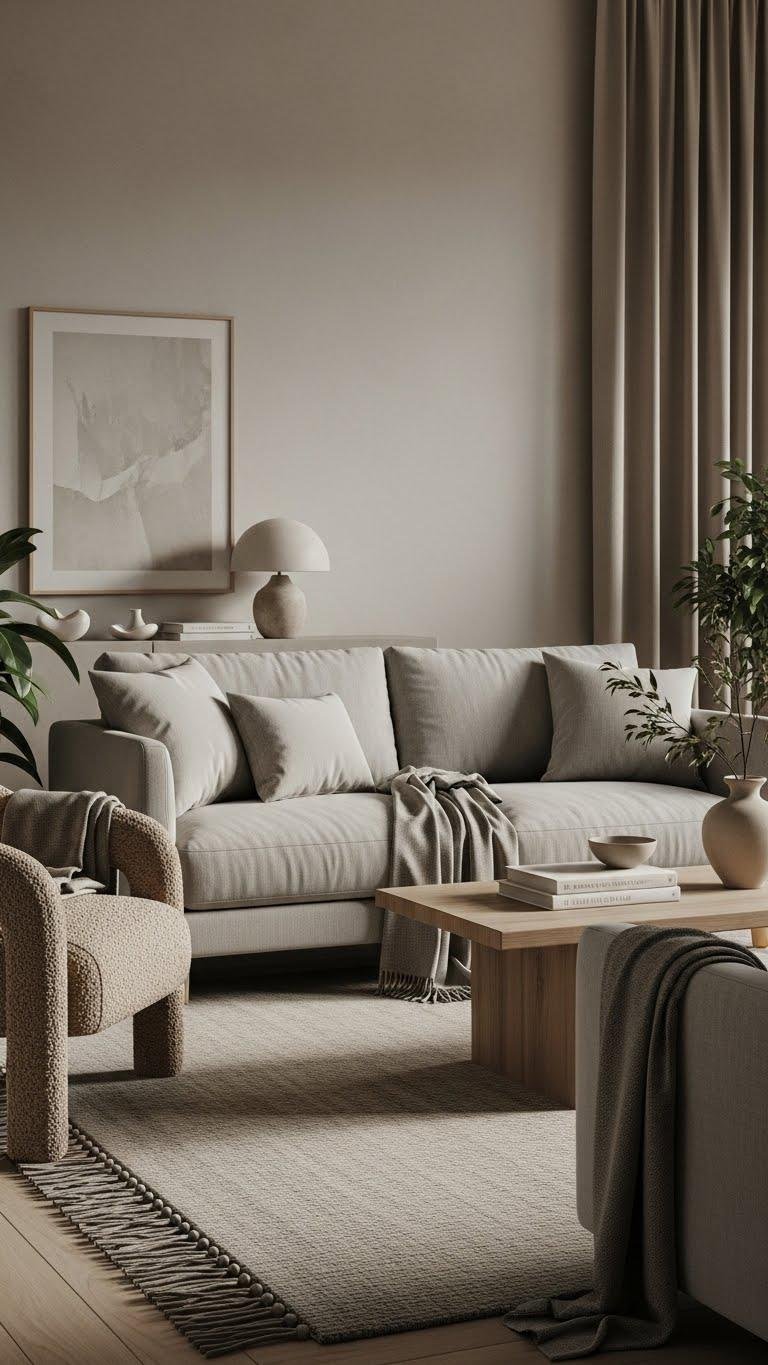
Start with a soft, neutral palette to anchor the room and let texture do the talking.
You’ll choose pale greige and warm taupe as core hues, layering linen, boucle, and matte wood to create depth without clutter. Keep contrasts subtle, mix cool and warm neutrals, and prioritize tactile details—throws, rugs, and drapery—that let you move freely and personalize a calm, liberated retreat.
Paint an Accent Wall in a Soothing Tone
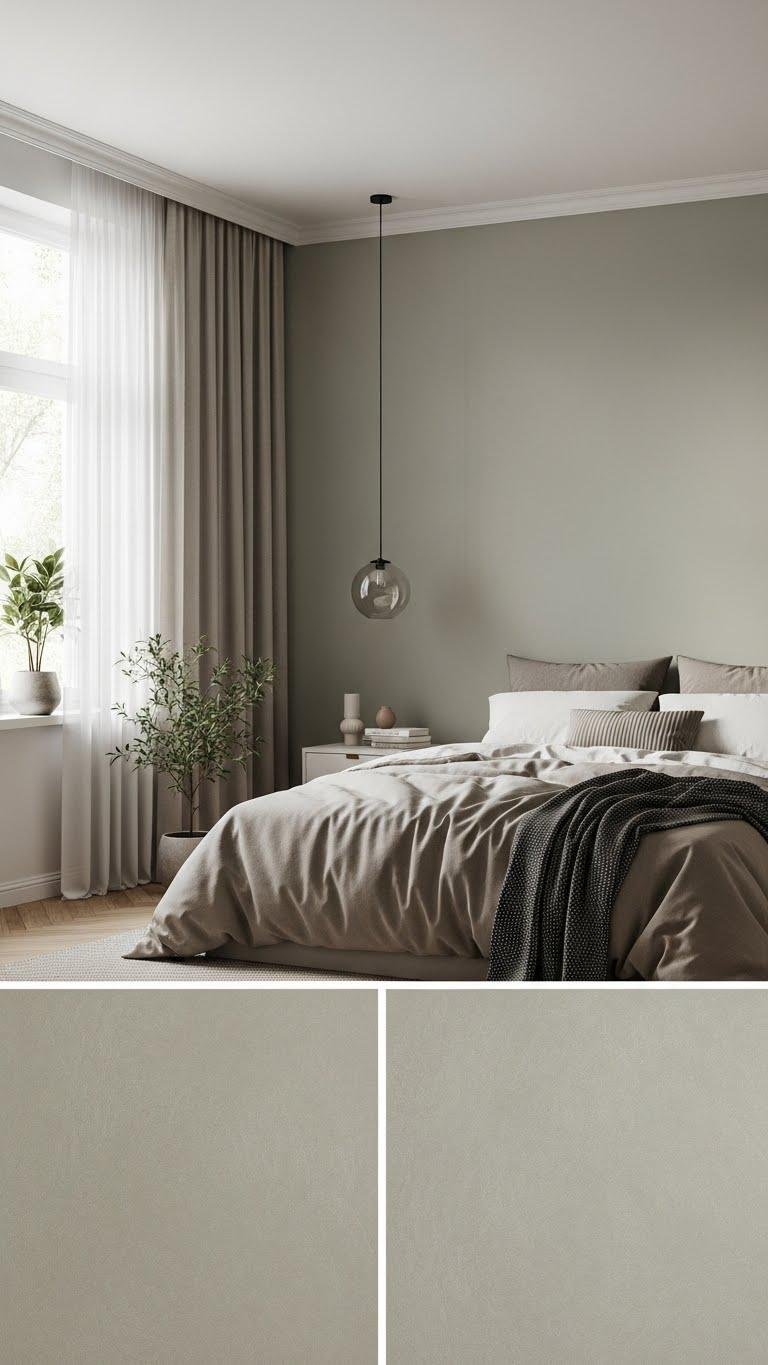
When you paint a single wall in a soft, muted hue, you give the room a focal point without overpowering its calm, neutral palette.
Choose a soothing tone that allows tonal contrasts with bedding and drapery, then experiment with textured finishes like suede or chalk wash for subtle depth.
You’ll create a liberated, restful retreat that feels intentional and effortlessly modern.
Use High-Quality Low‑VOC Paint
Paragraphs
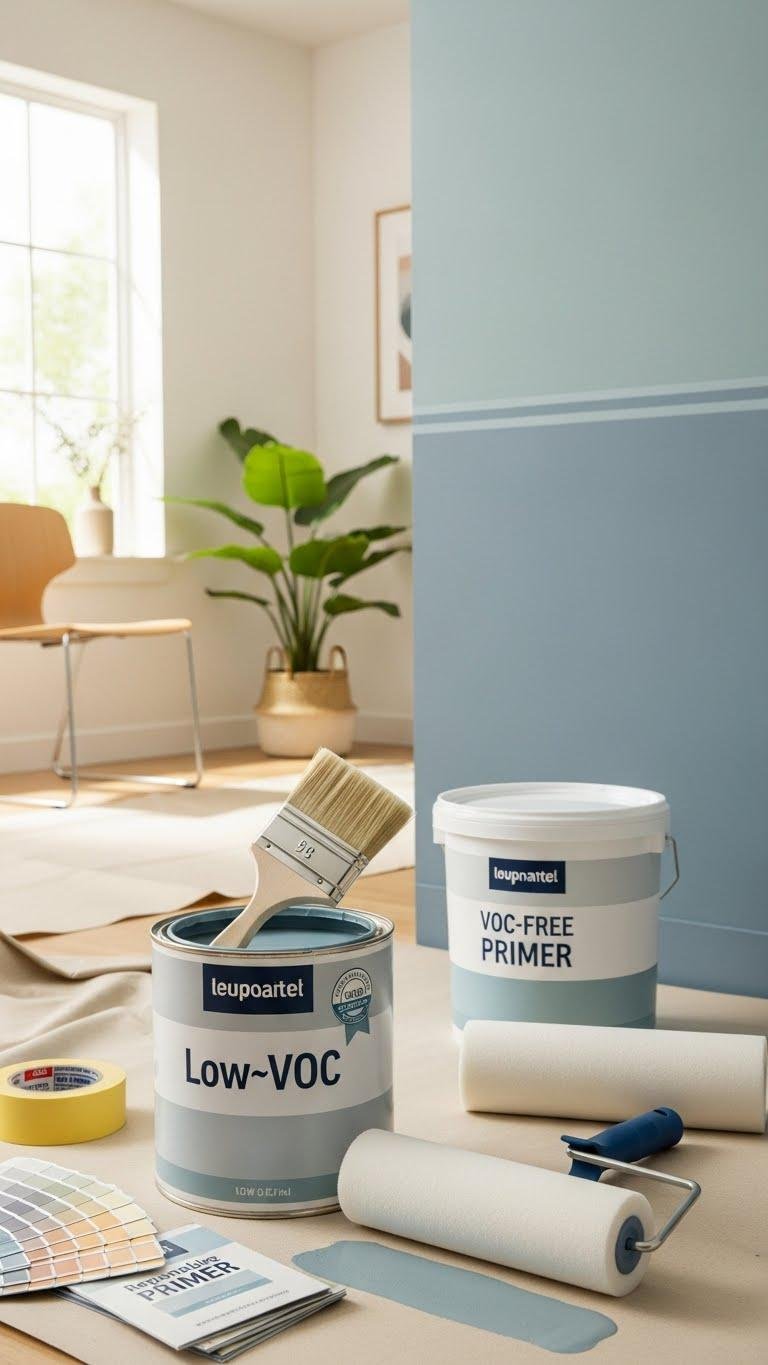
After you pick a calming accent hue, choose a high-quality low‑VOC paint so the room stays healthy and the color reads true.
You’ll want low‑odor pigments for quick occupancy and crisp coverage.
Invest in reputable brands, prep with VOC‑free primers, and apply two thin coats with a quality brush or roller.
That guarantees durable, fade-resistant color that supports your relaxed, liberated lifestyle.
Layer Monochromatic Shades
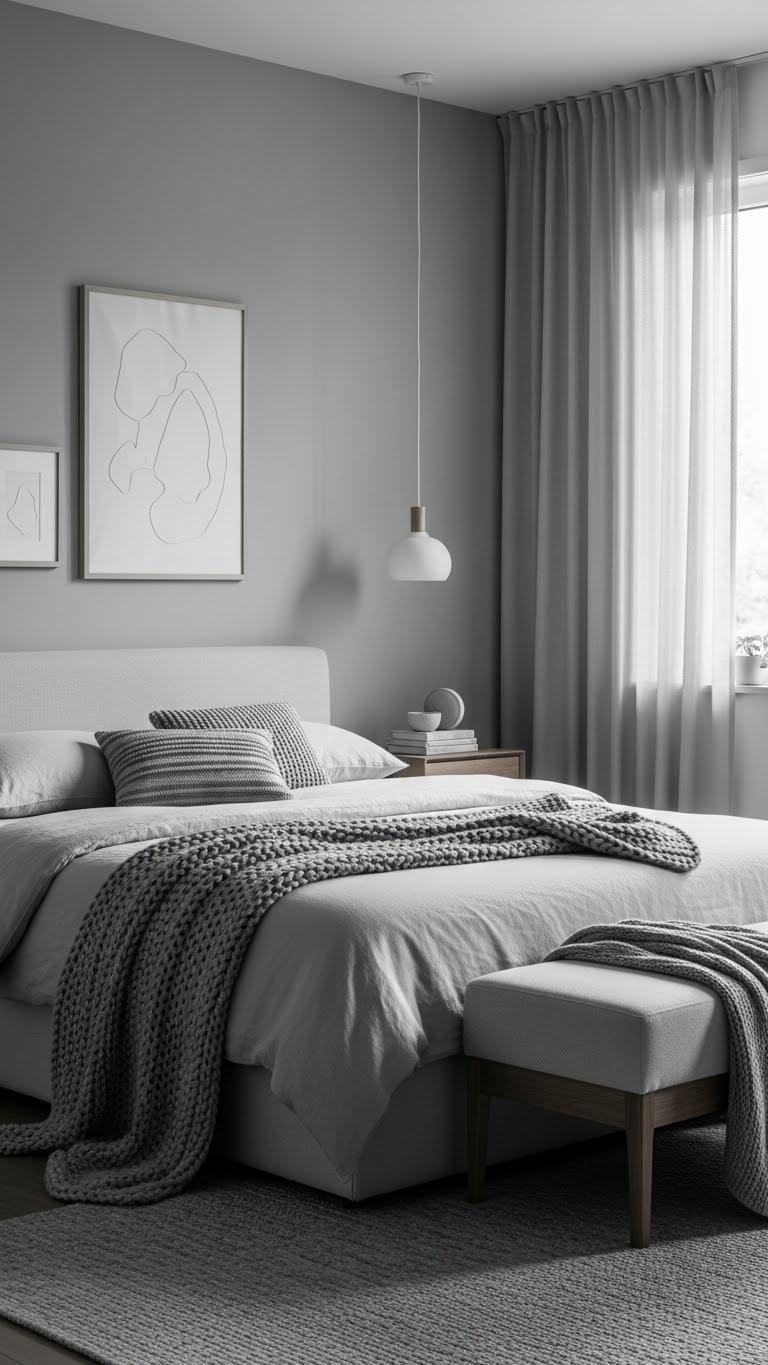
By working within a single color family, you create a cohesive, sophisticated bedroom that feels intentional and calming.
Embrace tonal gradation from deep to pale hues across walls, bedding, and upholstery so your eye flows freely. Use textured layering—throws, rugs, woven pillows—to add depth without contrast overload. You’ll achieve a liberated, modern retreat that reads refined, calm, and fully considered.
Add Light‑Reflective Eggshell or Satin Finishes
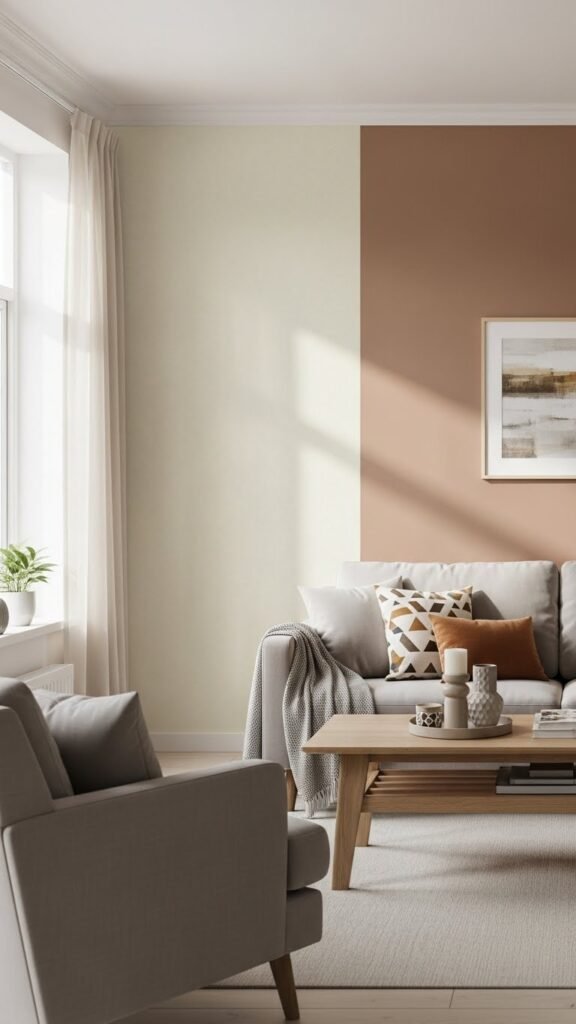
Paint eggshell or satin finishes to let light glide across surfaces and instantly warm the room’s mood.
You’ll choose eggshell when subtle depth matters—matte vs eggshell is about forgiving texture versus slight radiance.
Opt for satin where durability and easy cleaning meet style; satin sheen benefits include gentle reflection and enhanced color.
These finishes free the space, keeping it calm, luminous, and lived-in.
Invest in Long‑Staple Cotton or Linen Bedding
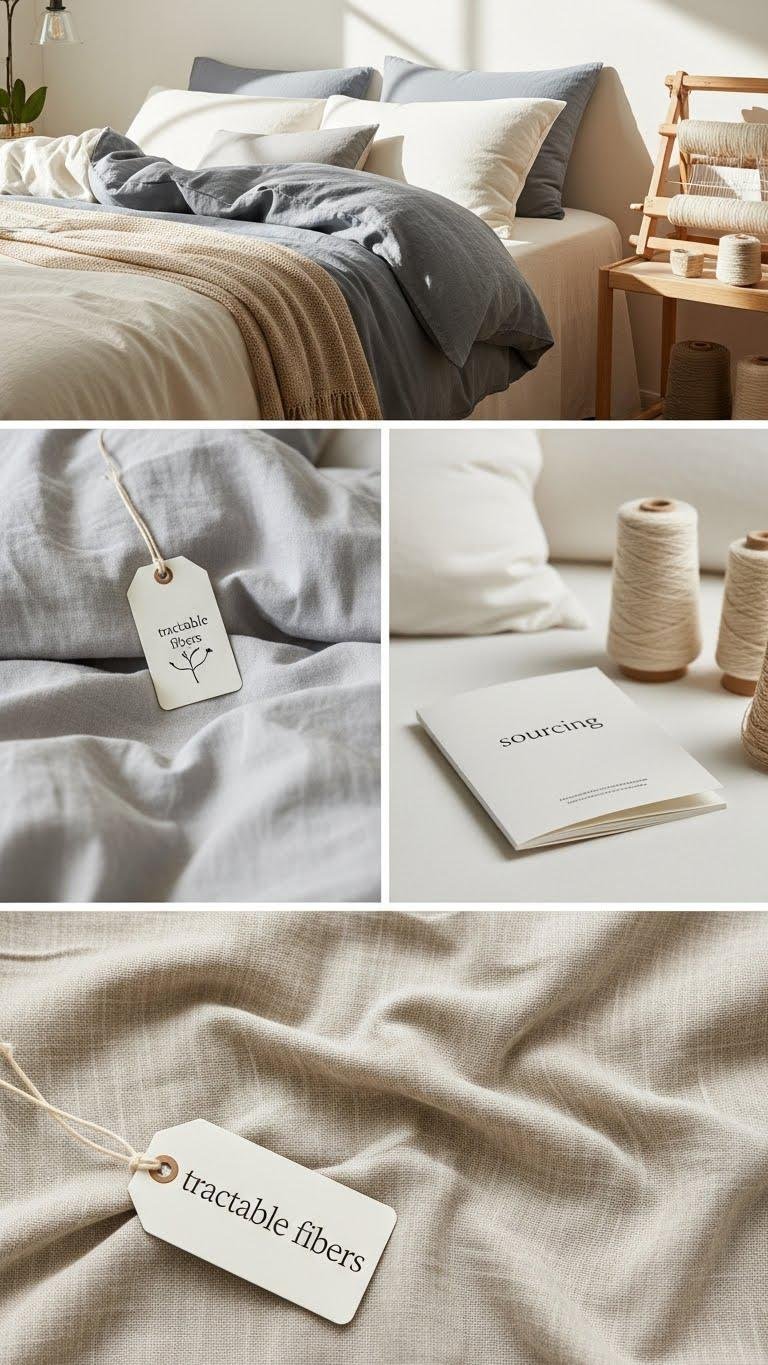
Choose long‑staple cotton or linen bedding to upgrade comfort and longevity without sacrificing the room’s relaxed aesthetic.
You’ll notice finer hand, breathability, and durable weave; check thread count thoughtfully—higher isn’t always better.
Inspect fiber sourcing for ethical, traceable origins that support natural texture and patina.
These choices let you sleep freer, in a quiet, well‑crafted retreat that ages gracefully.
Layer Sheets, Duvet, and Throws
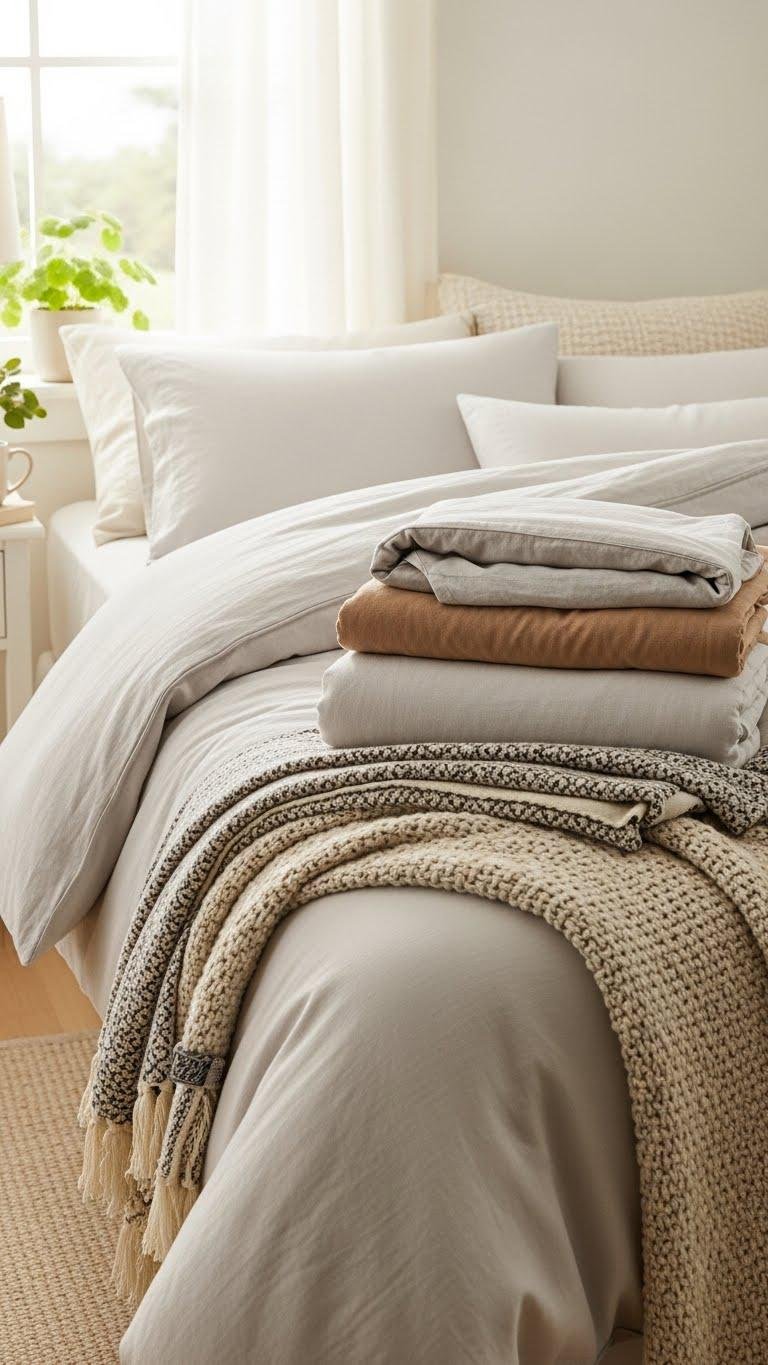
Start with a simple system: sheet, lightweight duvet, and one or two throws you can grab as the temperature shifts.
You’ll pair a breathable sheet with a seasonal duvet—swap insulation by season—then add a textured weighted throw for evenings when you want grounding comfort.
Keep colors cohesive, textures contrasting, and layers easy to remove so your bed feels liberated, curated, and effortlessly cozy.
Mix Supportive and Decorative Pillows
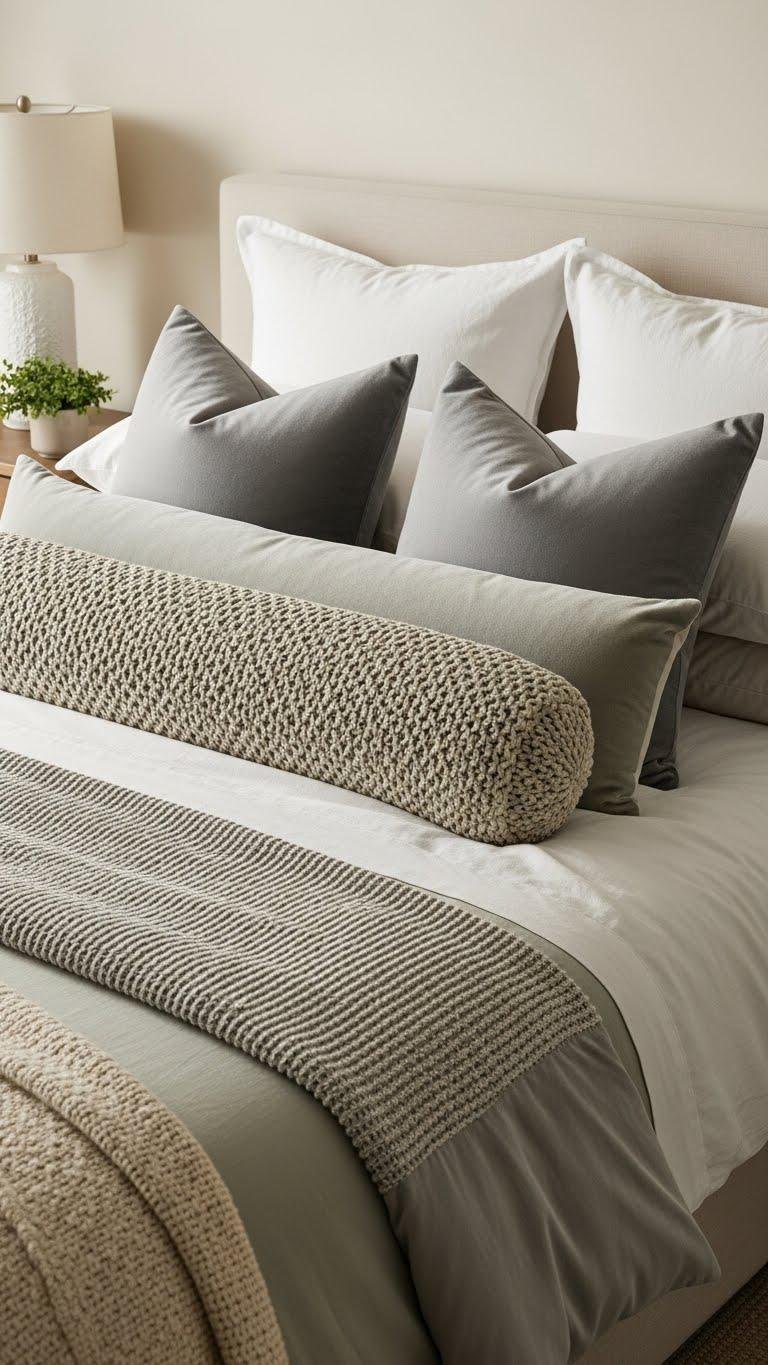
Once your layers feel inviting, give the same attention to pillows so your bed looks put together and feels great to rest against. Choose support pillowpairs for sleeping comfort, then add two statement shams and a decorative bolster for shape and personality. Mix textures—linen, velvet, knit—and keep a restrained palette so you can change accents freely without losing cohesion or comfort.
Place an Area Rug Under the Bed
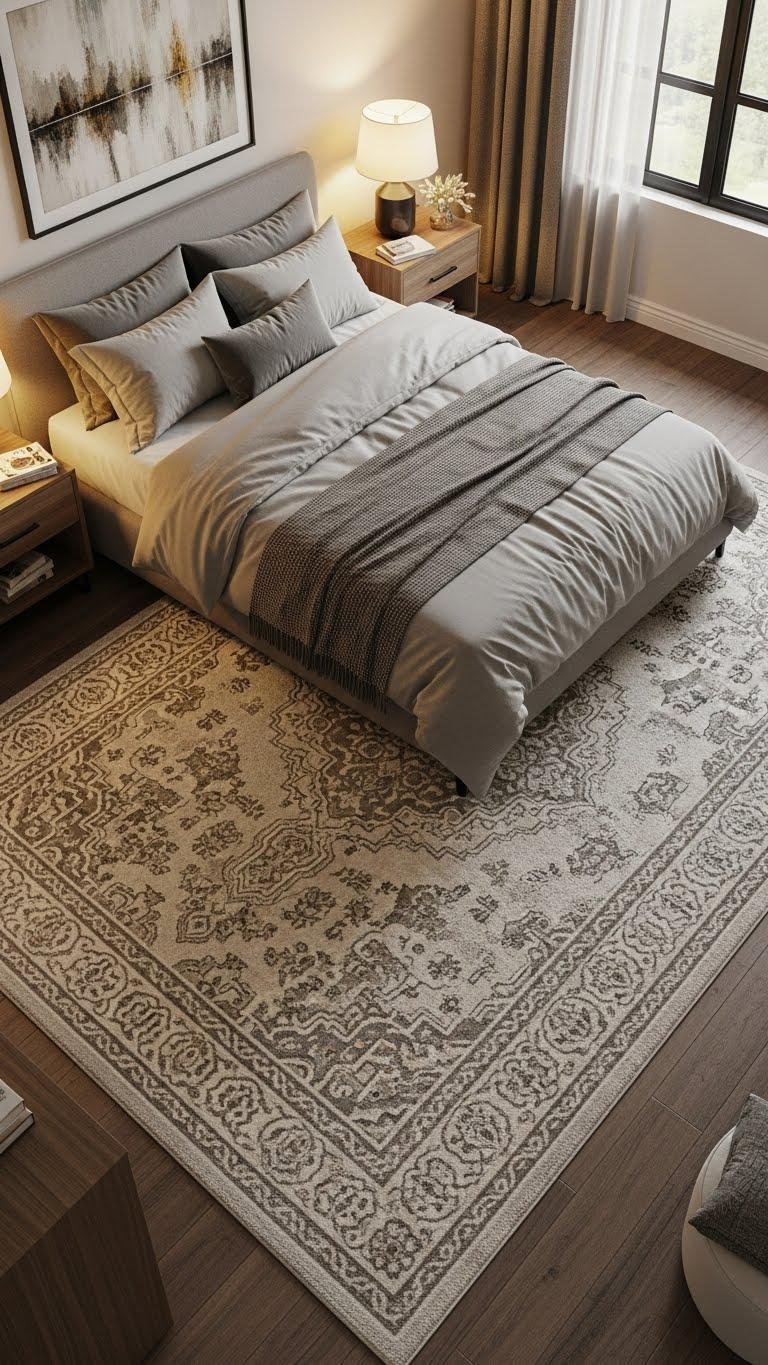
Framing your bed with an area rug instantly grounds the room and adds a layer of warmth underfoot, so pick one that complements your palette and scale.
You’ll prioritize rug placement—leave equal borders on both sides, extend beyond the foot—and choose pattern scale that suits bed size; bold, oversized motifs free the space while subtle repeats create calm, intentional cohesion.
Install Blackout or Heavy‑Lined Curtains
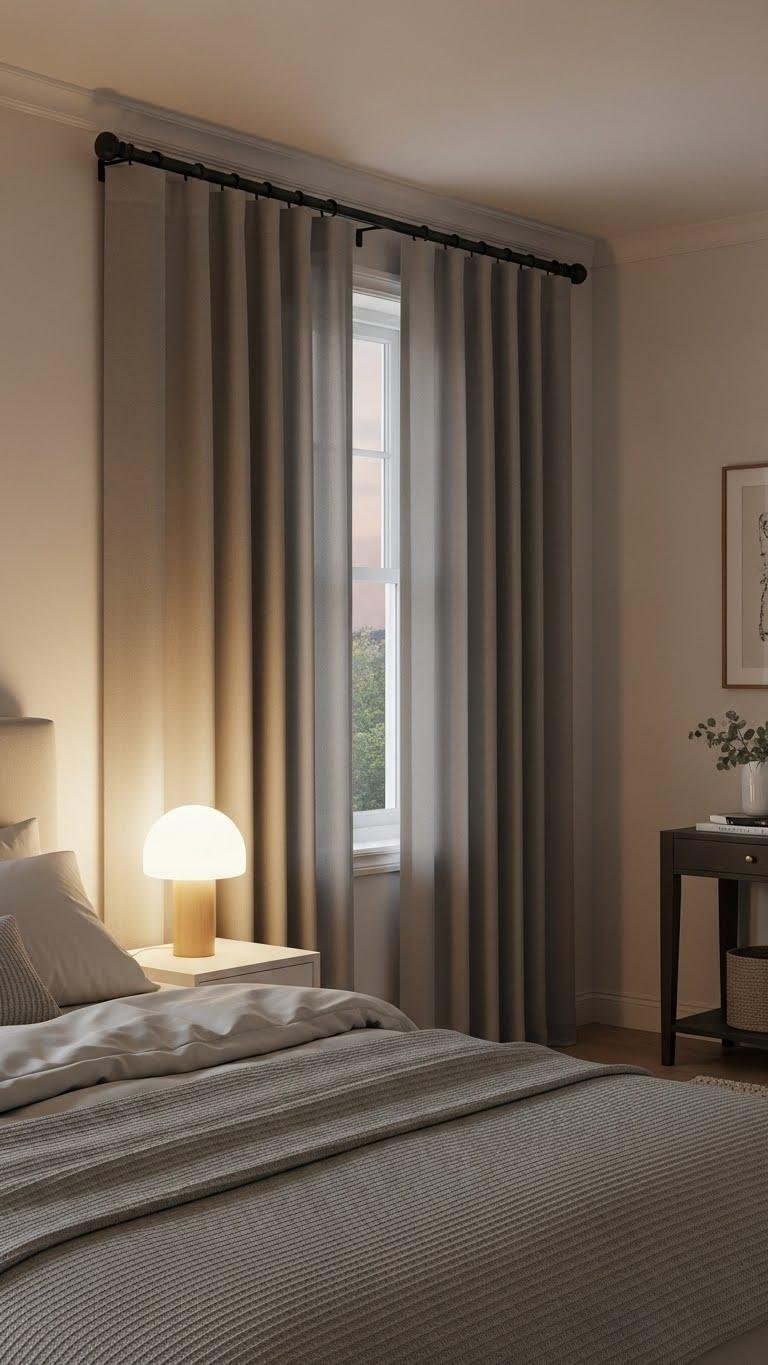
When you want a bedroom that feels restful and deliberately curated, install blackout or heavy‑lined curtains to cut light, reduce noise, and improve temperature control. Choose panels with thermal lining and sturdy, light‑blocking hardware so you can command privacy and comfort. Opt for tailored hems and a simple color palette to keep the room calm while preserving a liberated, intentional aesthetic.
Create Layered Lighting Zones
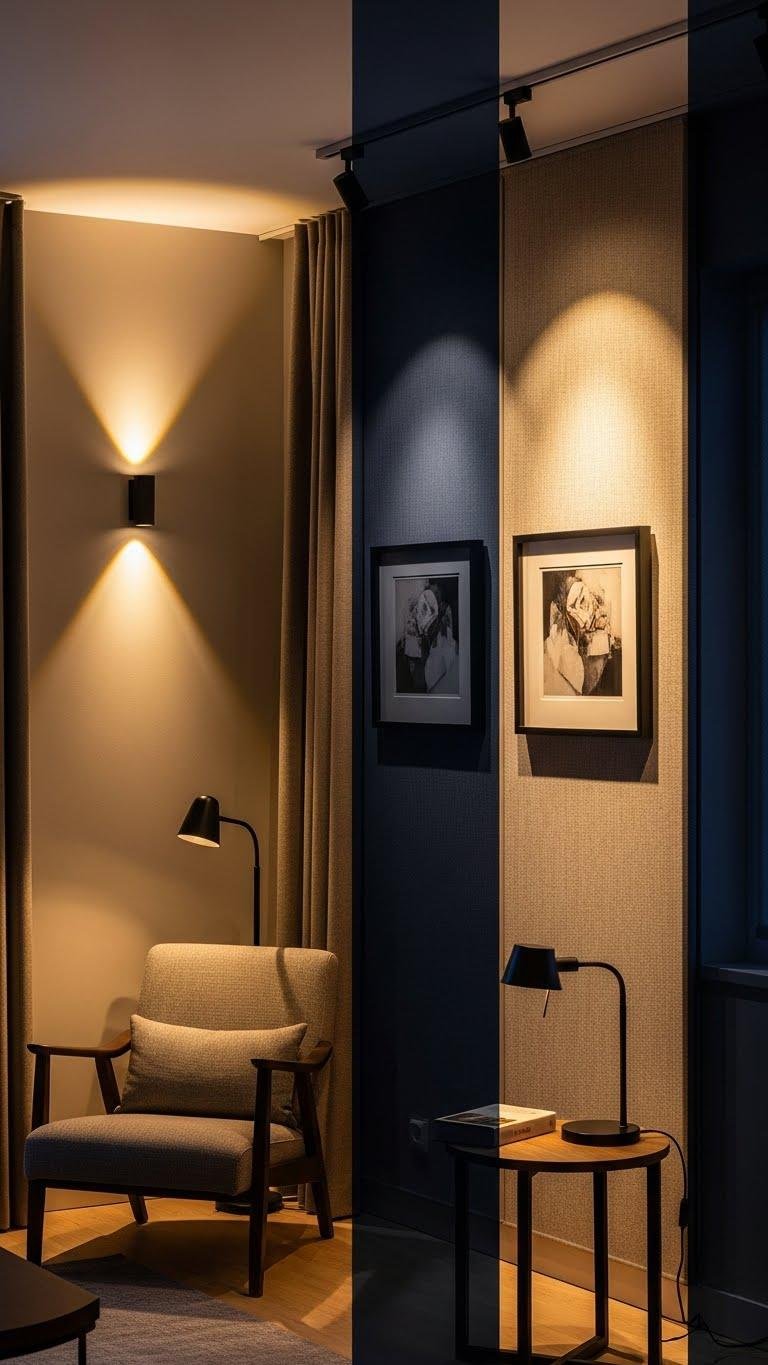
Blackout curtains give you control over daylight and privacy, but layered lighting is what lets you fine‑tune mood and function after the sun goes down.
You’ll zone the room with layered sconces for reading and accents, add curtain mounted tracklights to wash fabric or art, and combine overhead, task, and accent layers so you can shift atmosphere quickly and live by your own rules.
Use Dimmable Warm‑Color Bulbs

Frequently, the simplest switch you can make is swapping in dimmable warm‑color bulbs — they let you dial color temperature and brightness to match any evening activity, from bright prep for reading to a soft amber glow for winding down.
Choose LEDs with warm bulbcare ratings, test dimmer placement for smooth fades, and pick 2200–2700K tones so your room feels intimate yet flexible.
Add Bedside Task Lighting for Reading
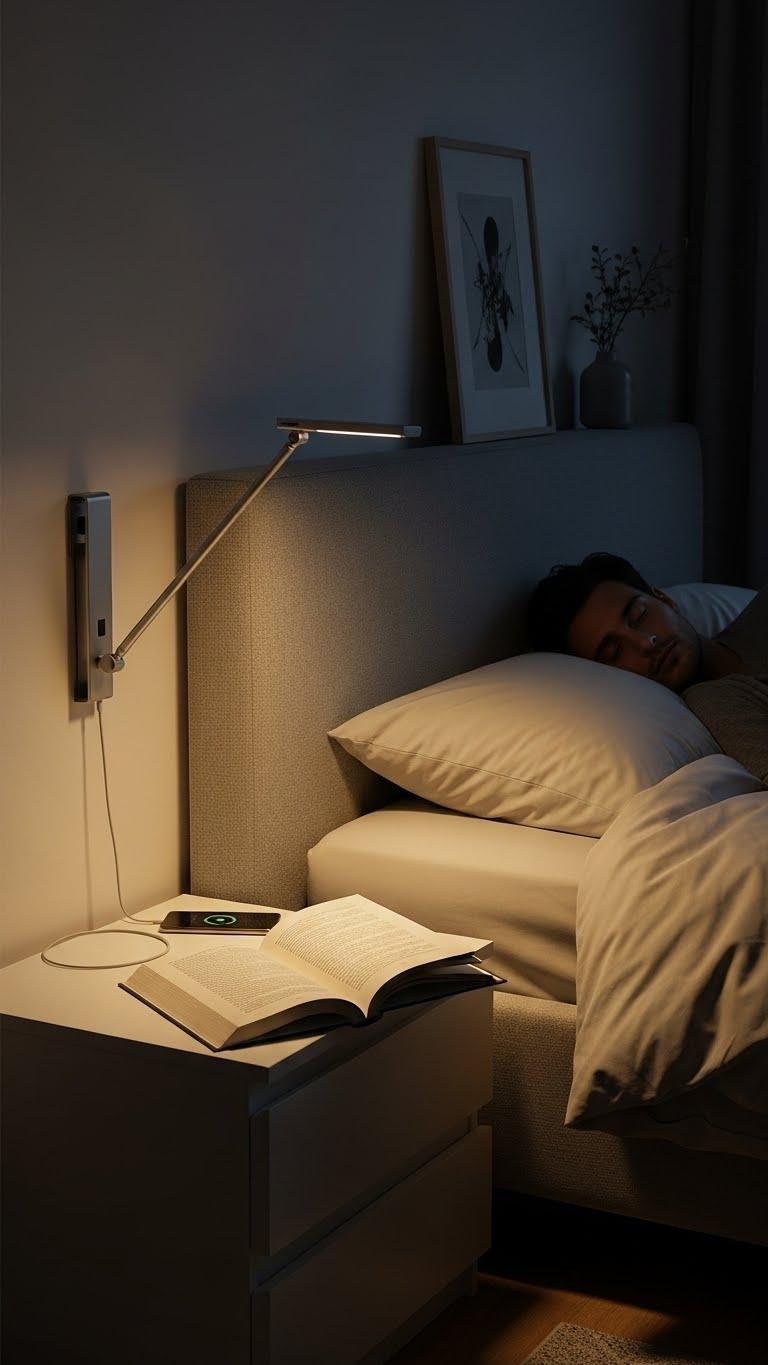
Position a dedicated bedside task light so you can read without disturbing your partner or straining your eyes.
Choose an adjustable swingarm lamp that directs focused light and tucks away when you want space. Prefer models with built in USB for charging devices without extra clutter.
Mount or clamp it at eye level, pick warm color temperature, and orient beam to reduce glare while preserving your room’s relaxed, liberated vibe.
Incorporate Night‑Friendly Low‑Lux Lamps
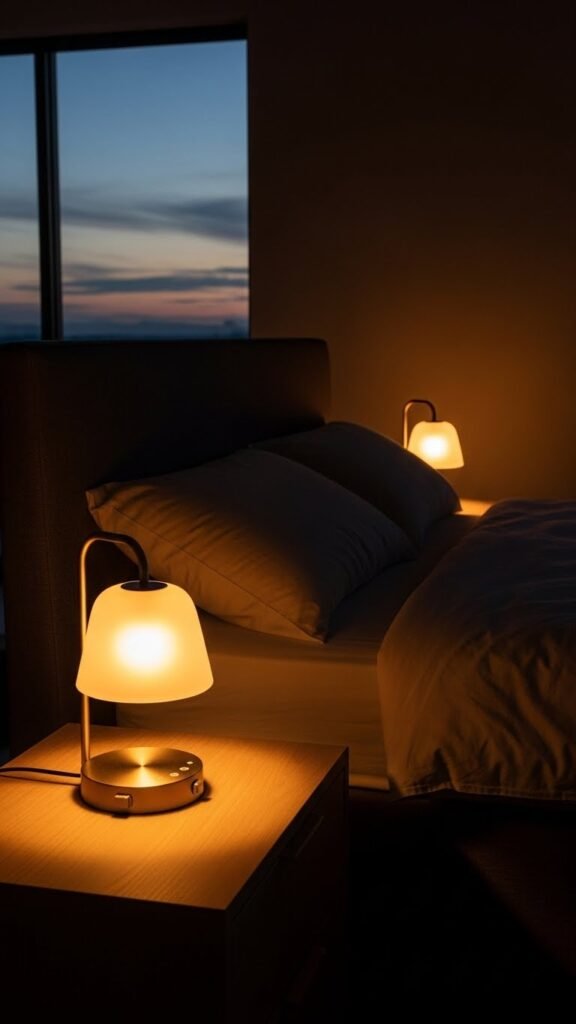
Choose low‑lux lamps that support restful nights and gentle wakeups. You’ll prefer warm amber tones and low‑glow lamps to minimize melatonin disruption and preserve calm. Pick adjustable intensity, frosted diffusers, and bedside dimmers for personal control. Position lights for soft pools, not glare. This trend‑aware approach gives you freedom to tune atmosphere precisely, promoting deeper sleep and serene mornings.
Automate Curtains and Lighting
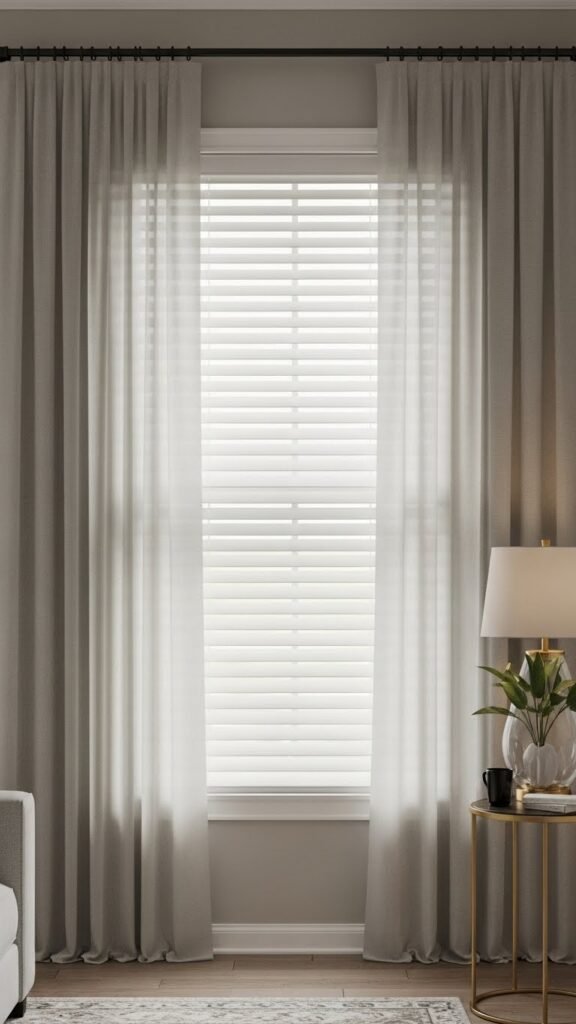
When you automate curtains and lighting, you gain precise control over daily rhythms without lifting a finger—schedules and sensors can mimic sunrise and sunset, reduce blue light exposure at night, and open blinds gradually to support natural wakeups.
You’ll install motorized rods and circadian dimmers to tailor intensity and timing, creating effortless comfort, energy savings, and a retreat-like routine that frees your days and nights.
Choose a Low‑Profile Bed Frame
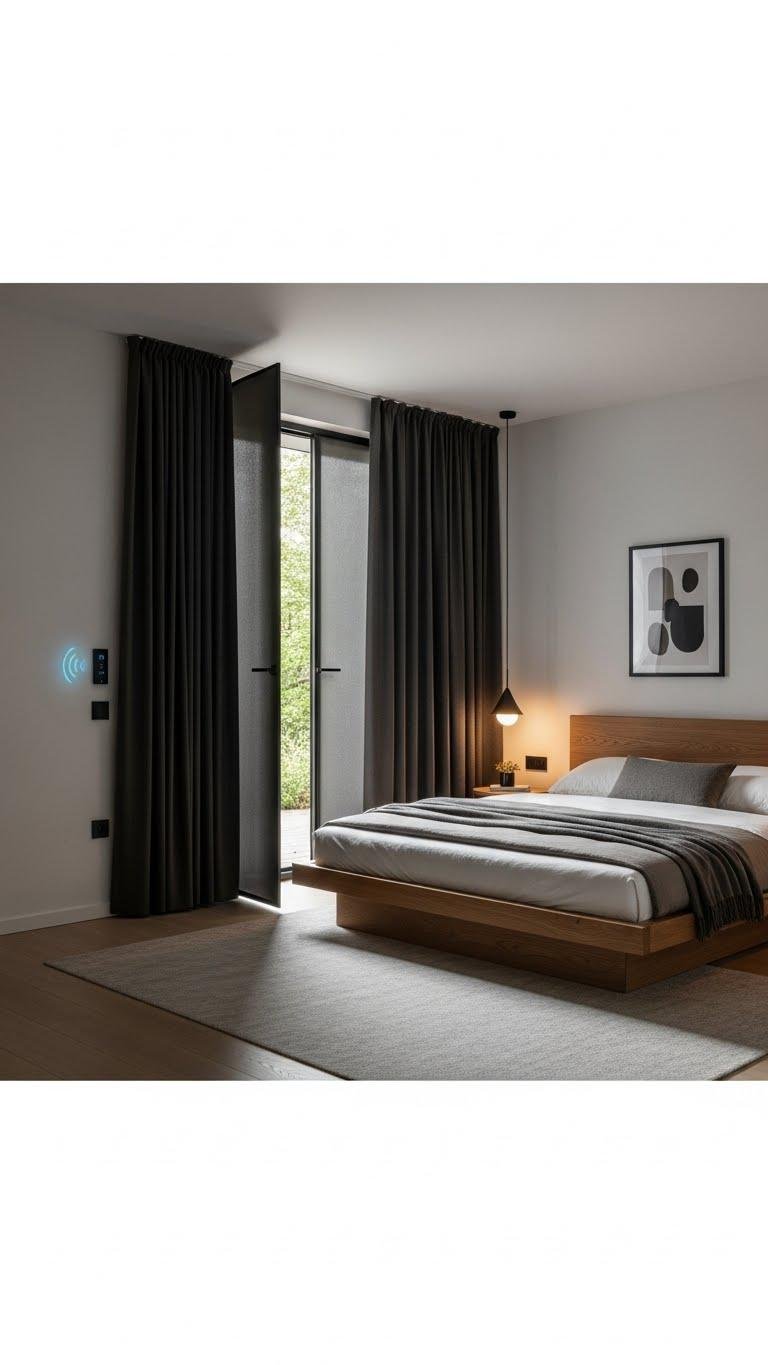
After automating curtains and lighting to shape your sleep-wake cycle, pick a low-profile bed frame to keep the room feeling open and modern while letting those systems take center stage.
Choose a platform bed or floor slung design with a minimalist frame, clean lines, and durable materials.
You’ll enjoy an uncluttered, liberating sleep zone that reads contemporary and intentional.
Maximize Hidden Storage and Declutter
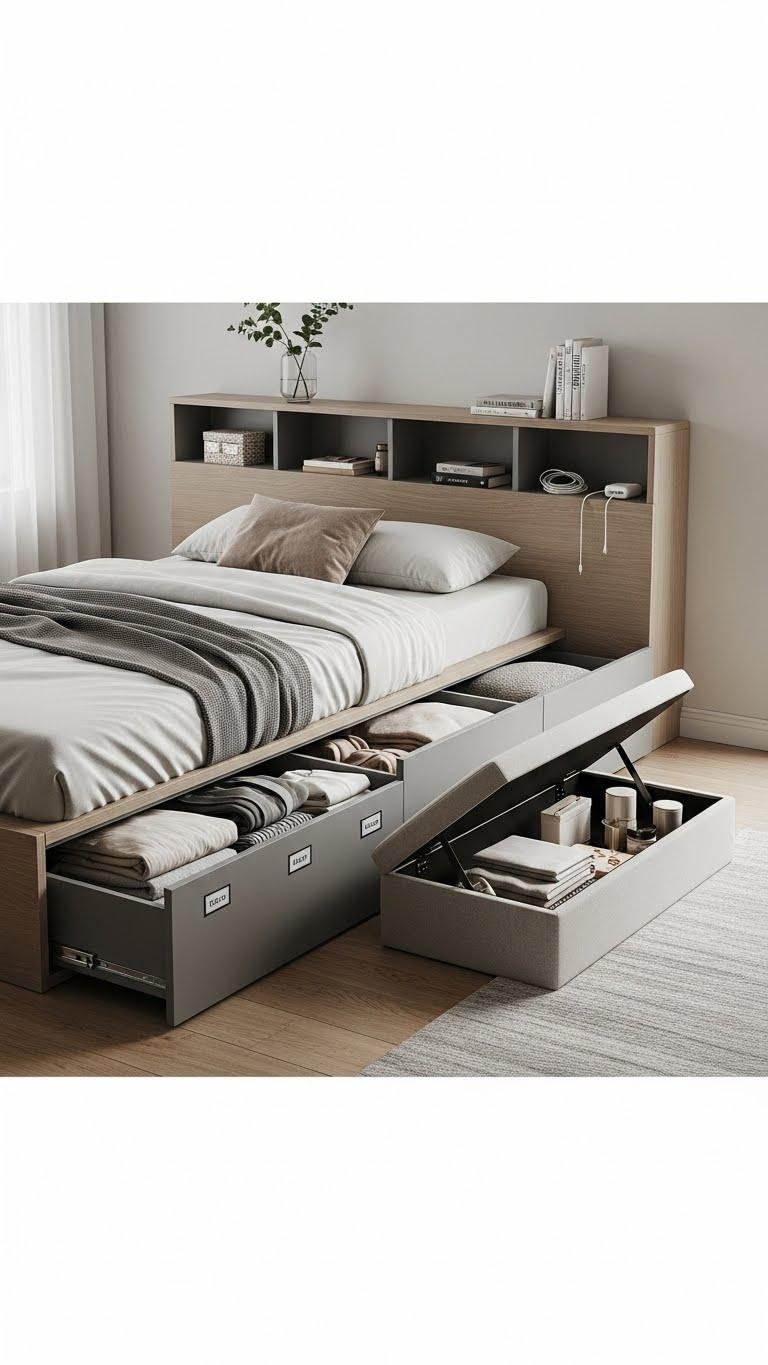
Tuck clutter out of sight and you’ll instantly make the bedroom feel calmer and more intentional: invest in under-bed drawers, a platform bed with built-in compartments, and ottomans or benches with lift-up storage so everyday items stay accessible but invisible.
Use under‑bed compartments for seasonal gear and headboard cubbies for books and chargers; label bins, purge regularly, and keep surfaces intentionally bare.
Add a Cozy Seating Nook
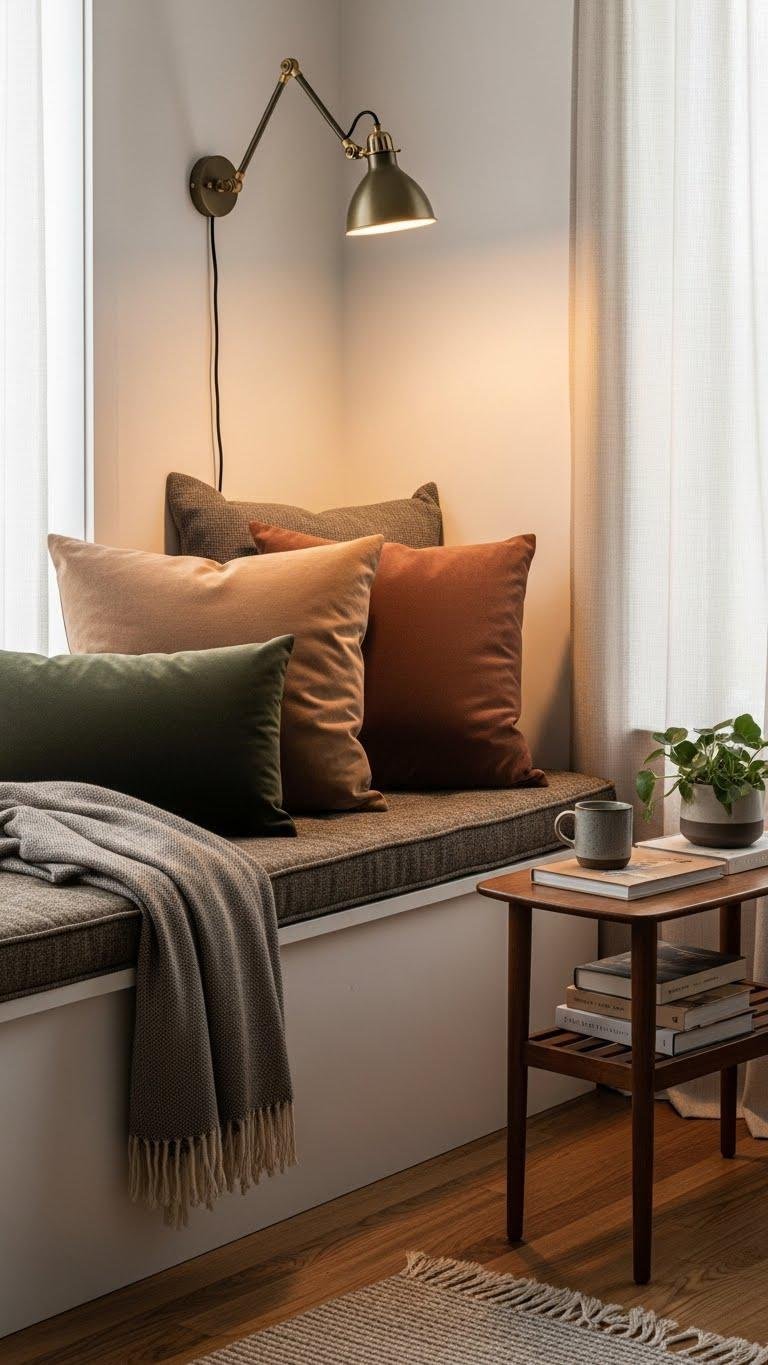
Clearing surfaces and stashing away items creates the visual calm that lets a cozy seating nook read as an intentional feature rather than cluttered extra furniture.
Carve a window bench or reading alcove with layered cushions, a slim side table, and directional light.
Choose durable fabrics, muted yet rich colors, and a simple throw—so you can relax freely, stylishly, and without fuss.
Select Multipurpose Furniture Pieces
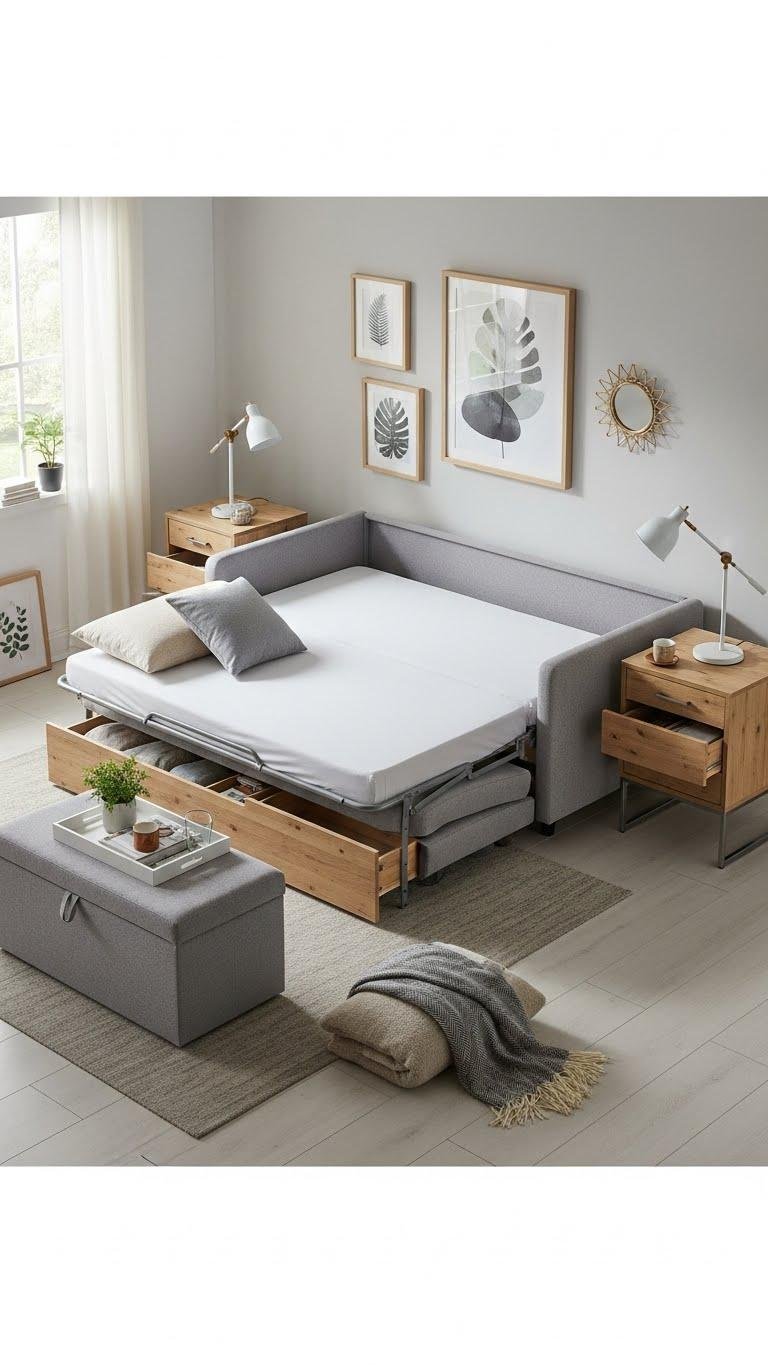
Having furniture that pulls double duty keeps your scaled layout feeling open and purposeful: choose pieces that offer storage, flexibility, or multiple functions so each item earns its footprint. You’ll favor a convertible daybed for lounging and guests, pair bedside tables with drawers, and add a storage ottoman to hide blankets or gear. Prioritize clean lines, durable finishes, and smart proportions for freedom.
Bring in Houseplants for Calm
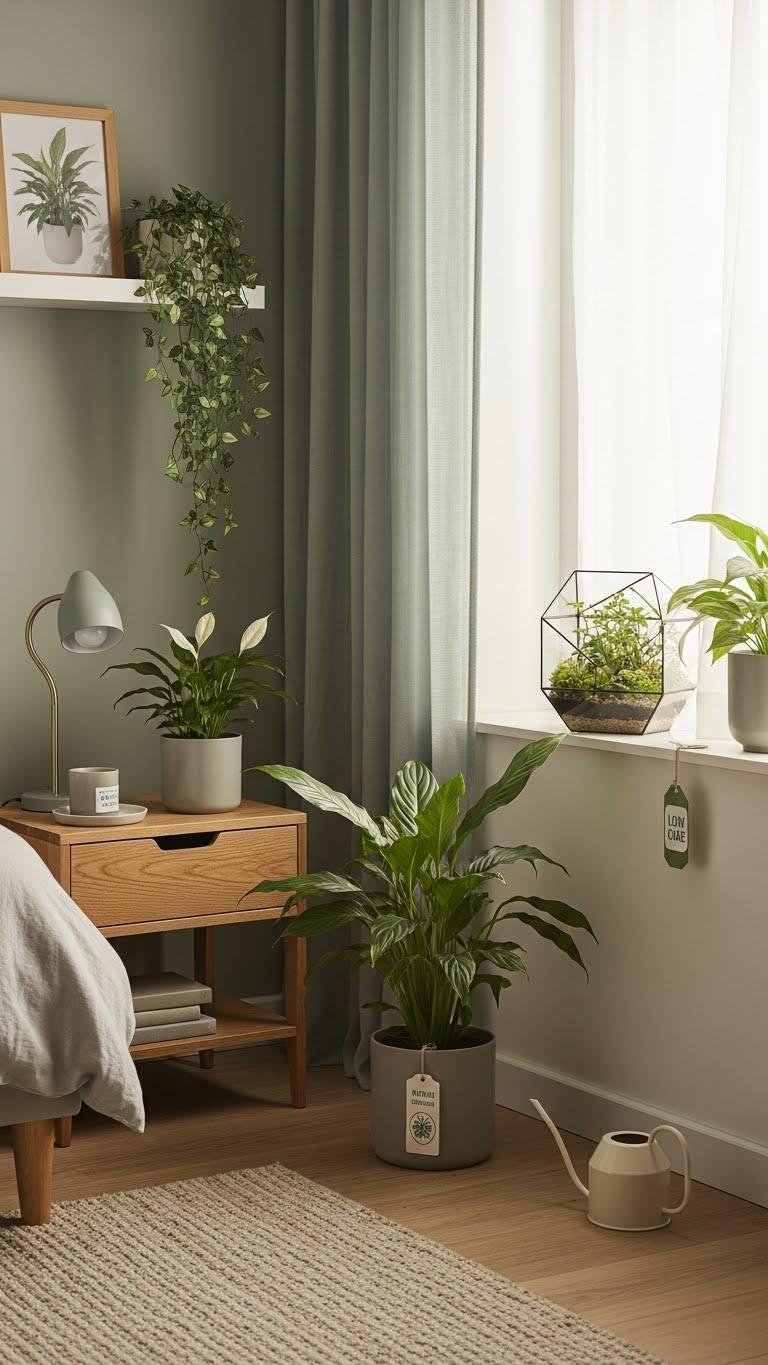
Often, adding a few well-chosen houseplants instantly calms a bedroom and improves air quality, so pick species and placements that suit your light and routine. You’ll choose air‑purifying varieties for bedside freshness, add trailing plants to soften shelving, and craft micro‑green terrariums for focused greenery. You’ll balance care demands with freedom, keeping maintenance low and style unmistakably yours.
Use Natural Materials and Textures
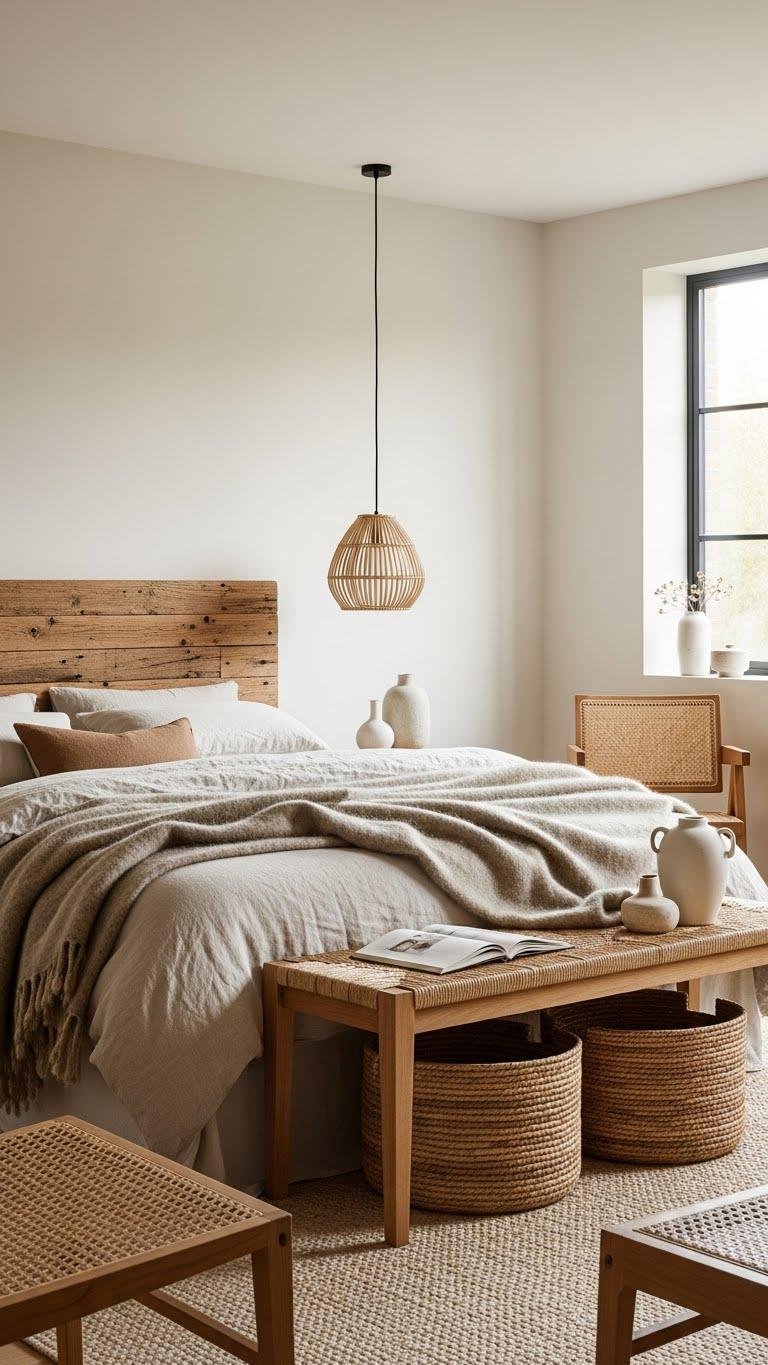
Layering natural materials and textures instantly grounds your bedroom and creates a touchable, lived-in look that feels intentionally curated.
Choose linen bedding, a wool throw, handwoven baskets for discreet storage, and a reclaimed timber headboard to anchor the room. Mix matte ceramics and rattan accents, keep palettes warm and restrained, and let tactile contrast—soft against rough—define a free, modern retreat.
Frame a View or Display Botanical Art
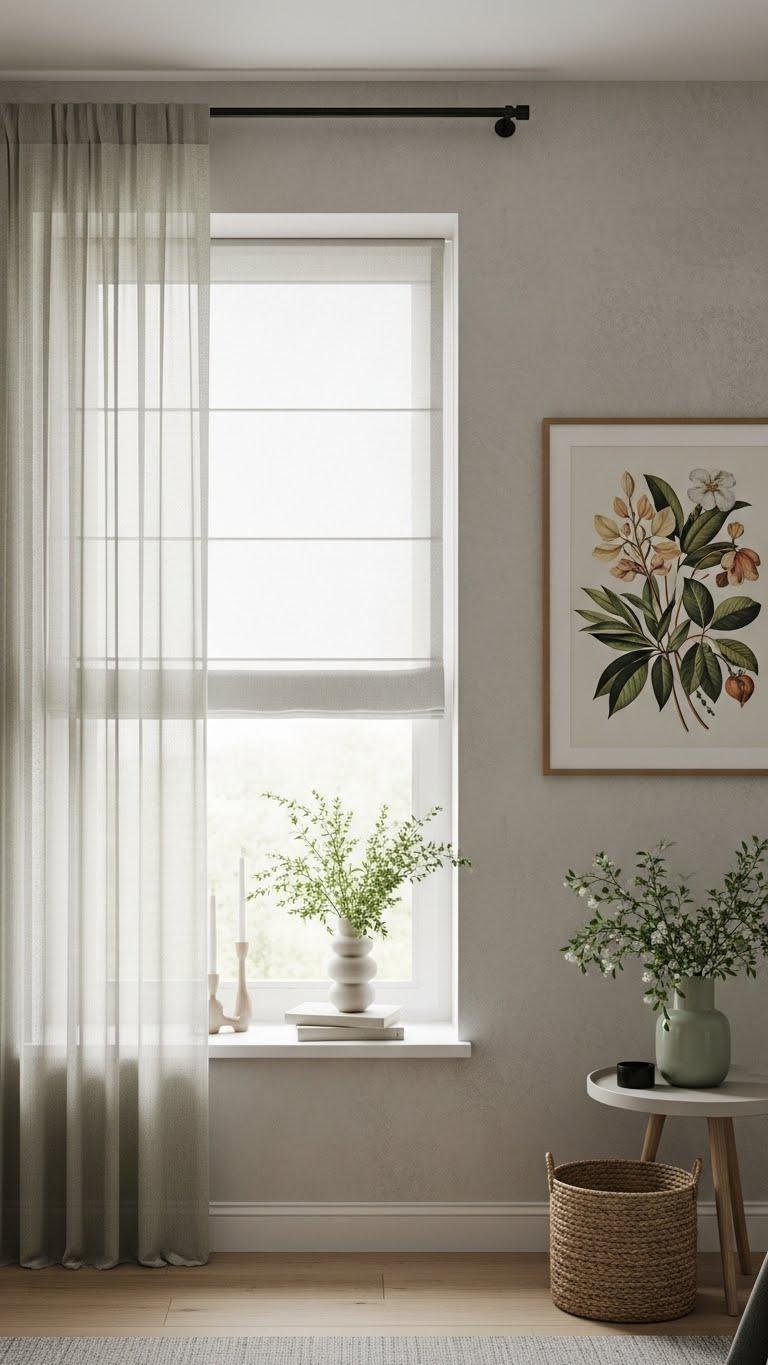
When you treat a window or a wall like a curated focal point, the room instantly feels more intentional—frame a view by keeping window treatments minimal and proportional so the outside becomes part of your palette, or mount botanical art to echo the room’s textures and tones. Position a framed botanical piece beside a window vignette, balancing scale and sightlines so each element breathes and frees the space.
Introduce Stone, Clay, or Woven Objects
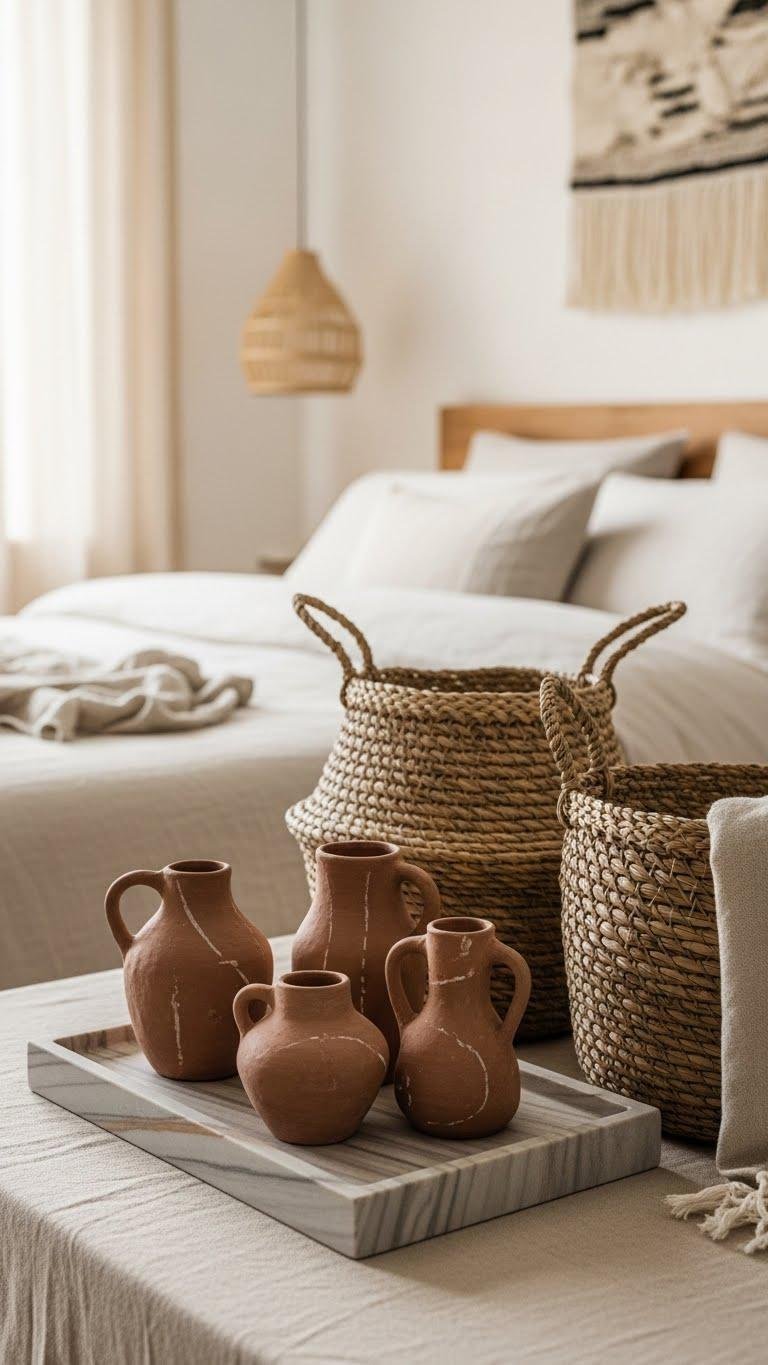
If you want your bedroom to feel grounded and tactile, bring in objects carved from stone, shaped from clay, or woven by hand—each material adds a distinct, textural note that anchors a soft palette.
Mix handmade terracotta vessels, a low stone tray, and woven seagrass baskets to add warmth, restraint, and artisanal imperfection that lets you live freely without clutter.
Use Subtle Scent Diffusion Sparingly
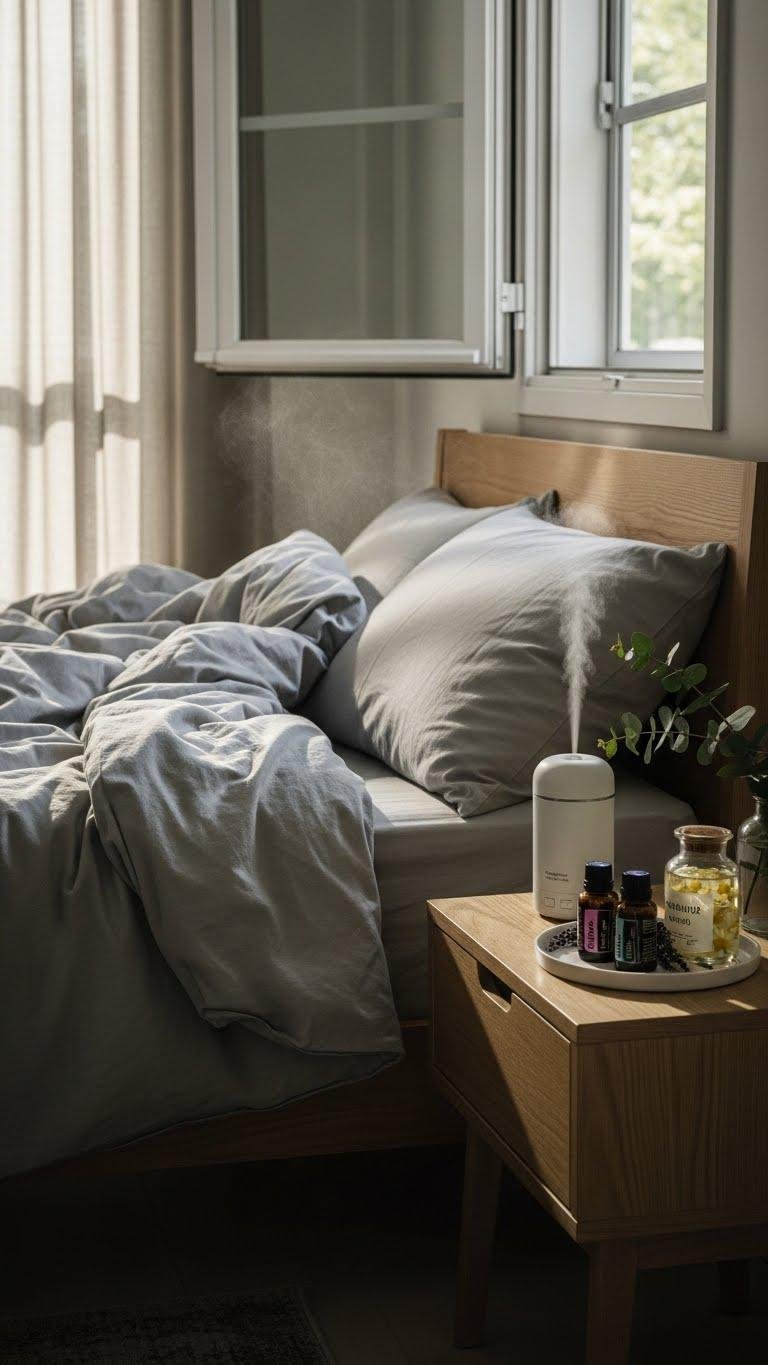
Although a whisper of fragrance can transform a bedroom into a restful retreat, use scent diffusion sparingly so aromas stay calming rather than commanding. You’ll favor subtlety: a micro misting device programmed briefly each morning, natural essential blends, and restrained scent layering to complement linens.
Keep strength low, rotate accords to avoid olfactory fatigue, and let the room feel open, not perfumed.
Improve Acoustics With Soft Textiles
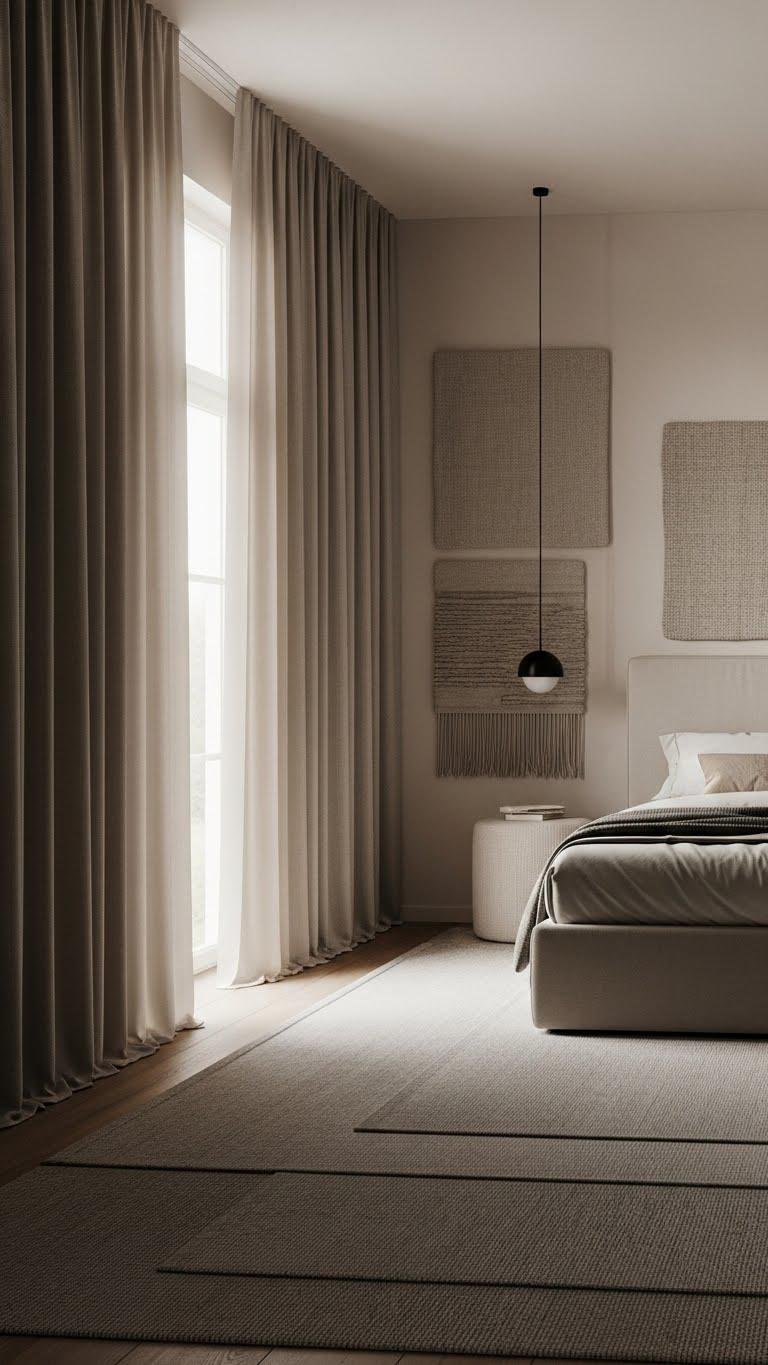
Because sound shapes how restful a room feels, soft textiles are one of the most effective, stylish ways to tame echoes and lower noise without major renovations.
You’ll add sound absorbing drapery to windows, layer rugs and upholstered headboards, and hang textured wall hangings to break reflections.
These curated choices let you control ambiance, preserve minimalism, and enjoy a quieter, freer retreat.
Create a Tech‑Free Charging Station

Soft textiles help muffle noise and make your bedroom feel like a sanctuary; now pair that quiet with a deliberate spot that keeps tech out of sight so your rest actually improves. Design a bedside drawer or shelf for sunset journaling, and a device basket organization system nearby for chargers.
You’ll reclaim calm, enforce boundaries, and sleep with intention.