
You can make shelves feel calm and curated without fuss. Start by grouping objects in threes or fives, layer books both ways, and mix tall pieces with low trays to create rhythm and depth. Use repeating textures and a limited color palette, tuck in trailing plants, and lean frames for instant contrast—these simple moves turn clutter into intention. Keep going to see 21 specific combinations that make every shelf look considered.
Mix Tall, Medium, and Small Objects in Odd Groupings

When you arrange shelf objects, group them in threes or fives with varied heights so your eye moves naturally across the display. You’ll mix tall, medium, and small pieces using asymmetrical spacing and varying widths to keep rhythm.
Lean one taller item, cluster mid-sized pieces, and tuck a small accent into negative space. You’ll create freedom, balance, and confident visual flow.
Layer Books Vertically and Horizontally With a Sculptural Accent
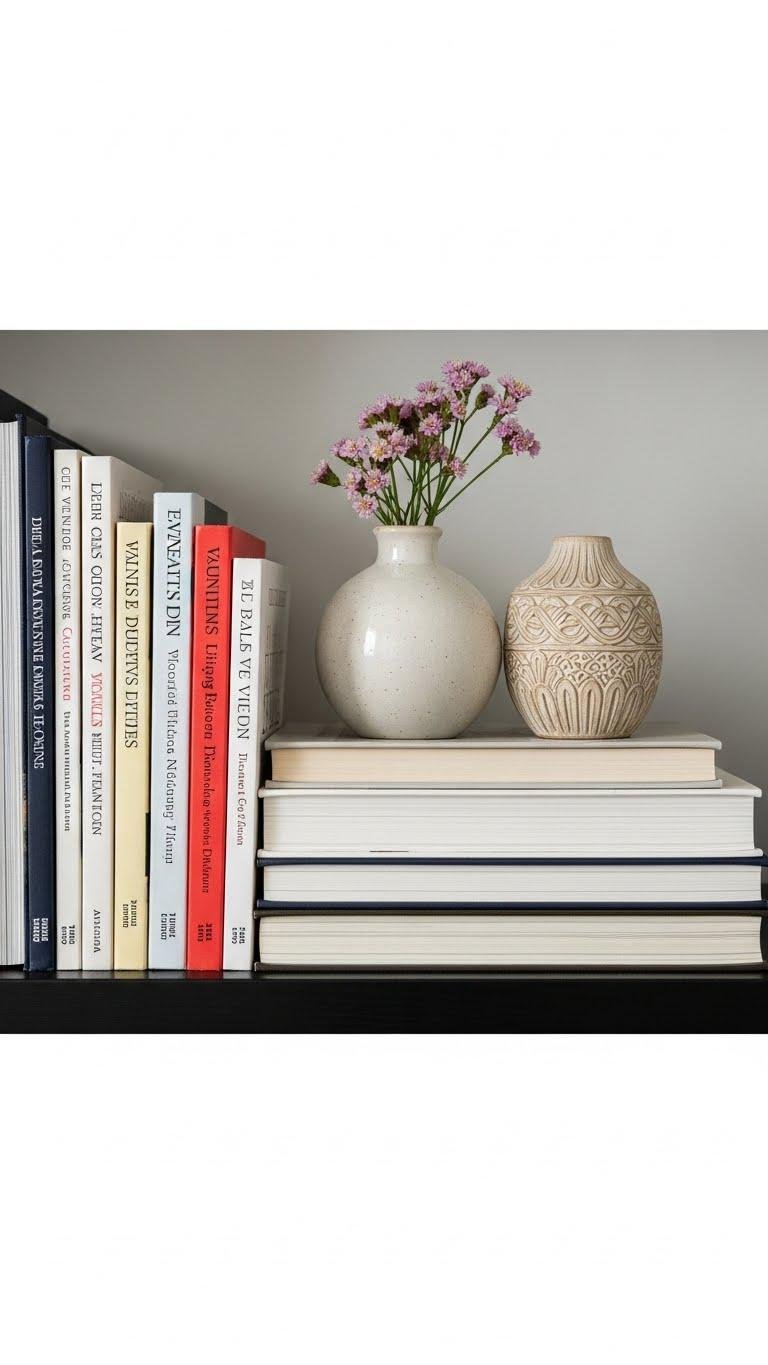
Layer books vertically and horizontally to build depth and guide the eye: stand a small stack upright, lay another flat to form a platform, then place a sculptural accent—like a ceramic bud vase or carved object—on the horizontal pile to punctuate the composition.
You’ll balance stacked spines with sculptural contrast, create rhythm, and let each piece breathe so your shelf feels intentional and free.
Create a Decor Triangle With a Statement Vase
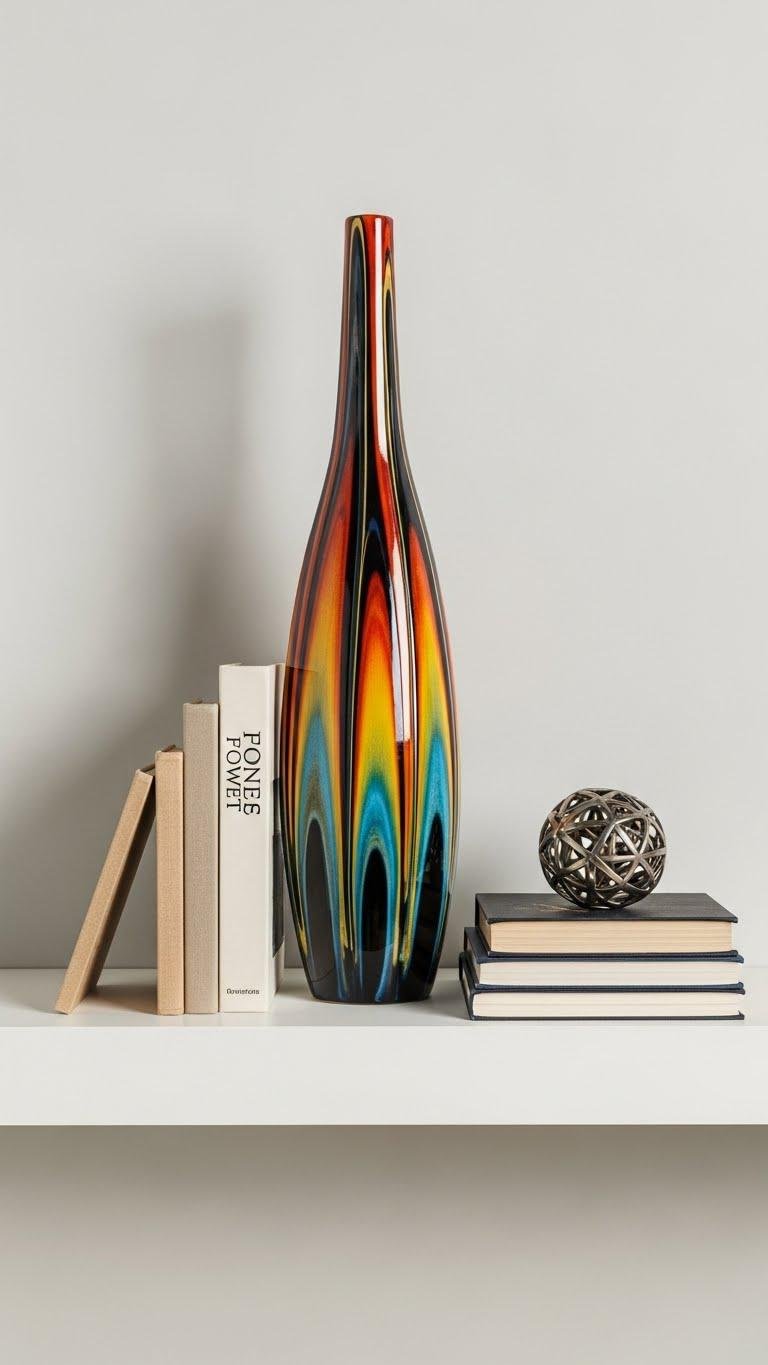
Anchor a shelf with a striking vase and build a simple triangle by pairing it with two lower elements—think a stack of books and a small object—to create balance and direct the eye. You’ll use scale contrast to keep things dynamic: the vase is tall, the others low.
Confident focal placement anchors the composition, freeing you to edit and breathe within the shelf.
Pair a Frame, Vase, and Small Decor for a Cohesive Vignette

Because you want a cohesive vignette, pair a framed image with a vase and a small object so each piece supports the others visually and functionally.
You’ll use frame styling to echo the vase’s color or texture, and vase pairing to tie scale and rhythm. Place the small decor as a bridge—a book, candle, or sculpture—that completes the trio without clutter, letting each element breathe.
Build a Wave of Varied Heights Across the Shelf
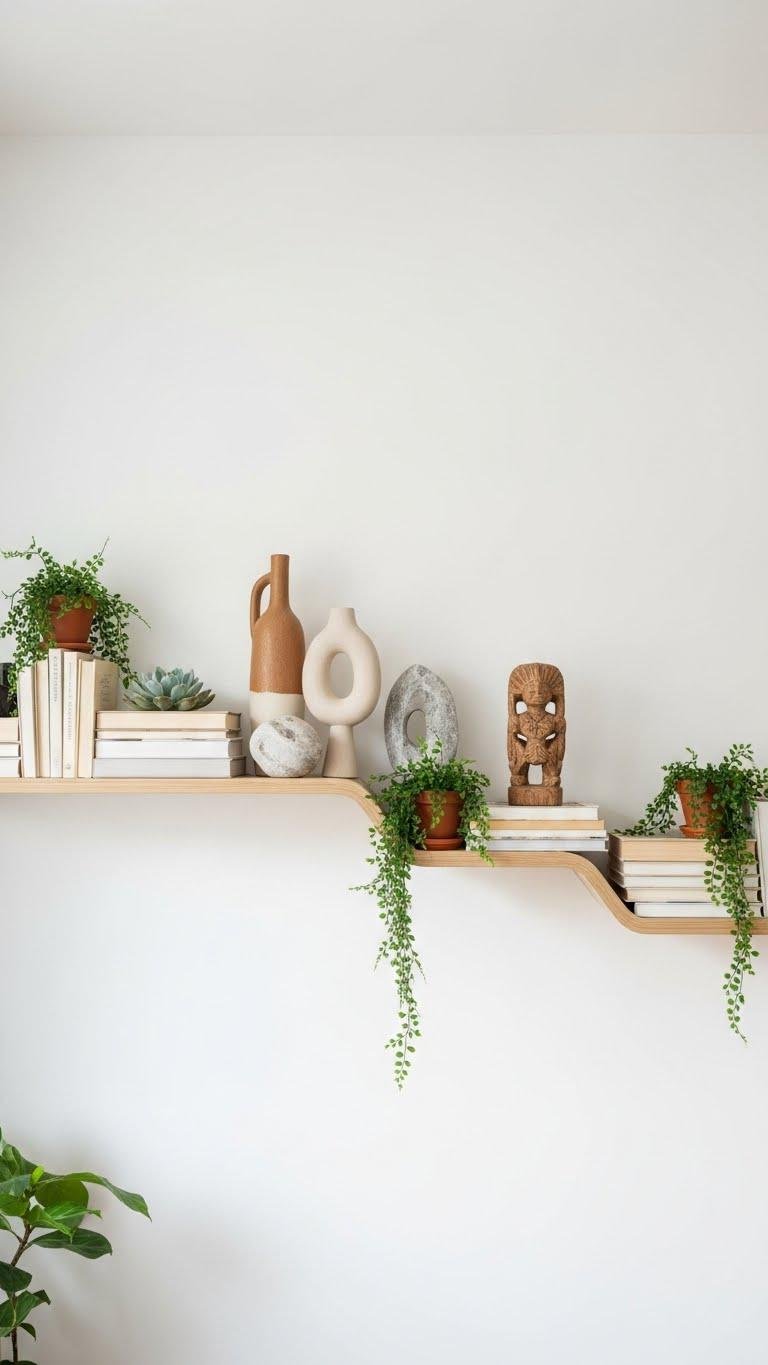
When you arrange objects in a gentle wave—low at the ends, peaking toward the center—you create rhythm and flow that guides the eye across the shelf.
Embrace rhythmic heightplay: mix books, plants, and sculptural pieces so heights rise and fall. You’ll craft a confident, staggered silhouette that feels airy and intentional, giving your space freedom without chaos.
Use Wood, Ceramic, and Metal for Textural Contrast

Texture matters: pair warm wood, smooth ceramic, and cool metal to give your shelf a deliberate tactile story. You’ll mix reclaimed wood shelves or blocks with glazed ceramic vases and matte metal bookends to create contrast. Arrange pieces so finishes alternate, letting light catch edges. You’ll balance weight and air, keeping compositions open and intentionally varied for a liberated, lived-in look.
Anchor a Shelf With a Black Pitcher and Natural Elements
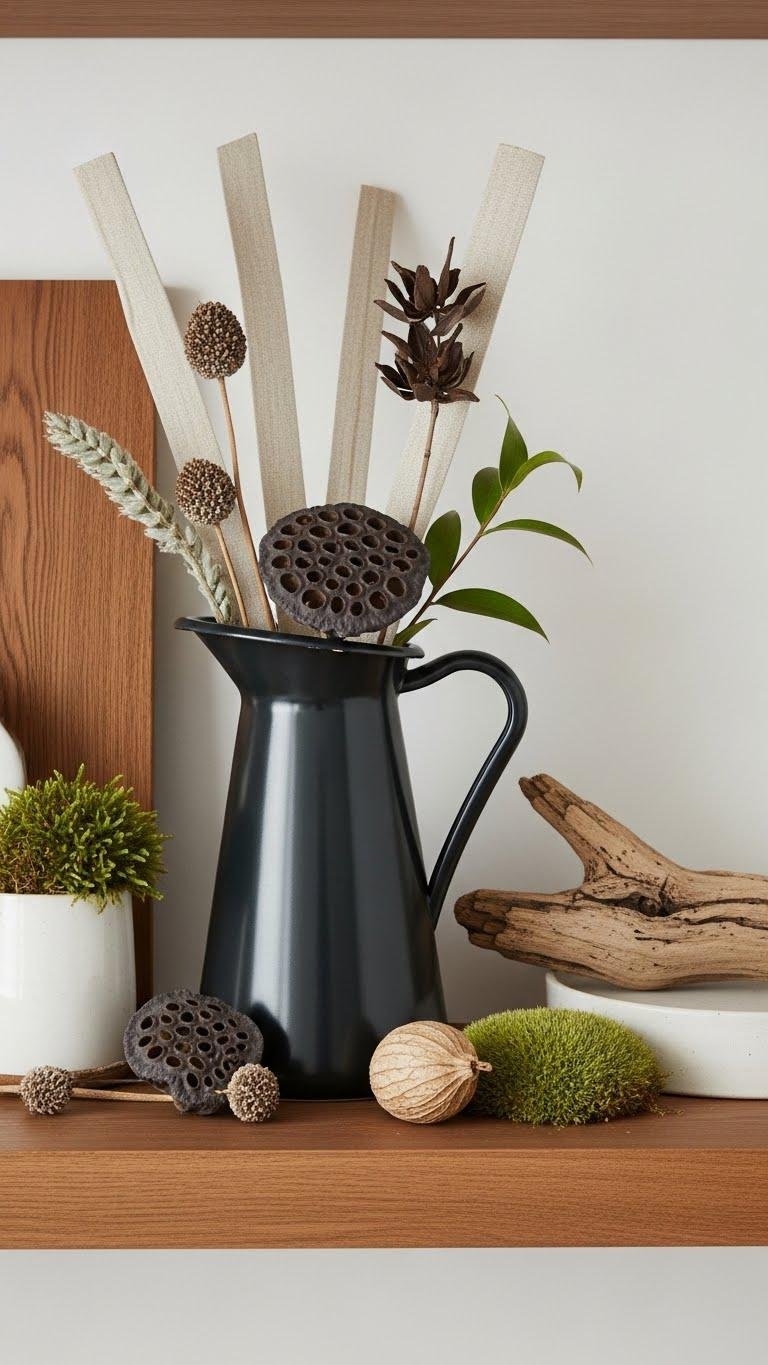
You’ve already set the tactile stage with wood, ceramic, and metal; now anchor the arrangement with a matte black pitcher to ground the composition.
Place it where pitcher proportion balances height and negative space.
Surround with organic textures—linen stems, seed pods, small moss—then add a low piece of driftwood contrast to loosen formality.
You’ll create a freed, calm vignette that reads intentional.
Stack Books as Pedestals for Smaller Objects

A small stack of books can instantly elevate a tiny object, giving it presence and purpose on a shelf. Use stacked pedestals of varied heights to create rhythm; set miniature sculptures or ceramic bowls atop hardcover book risers for clean sightlines.
You’ll control scale, introduce texture, and free visual space while keeping arrangements intentional and effortlessly balanced.
Add Cascading Greenery for Softness and Movement
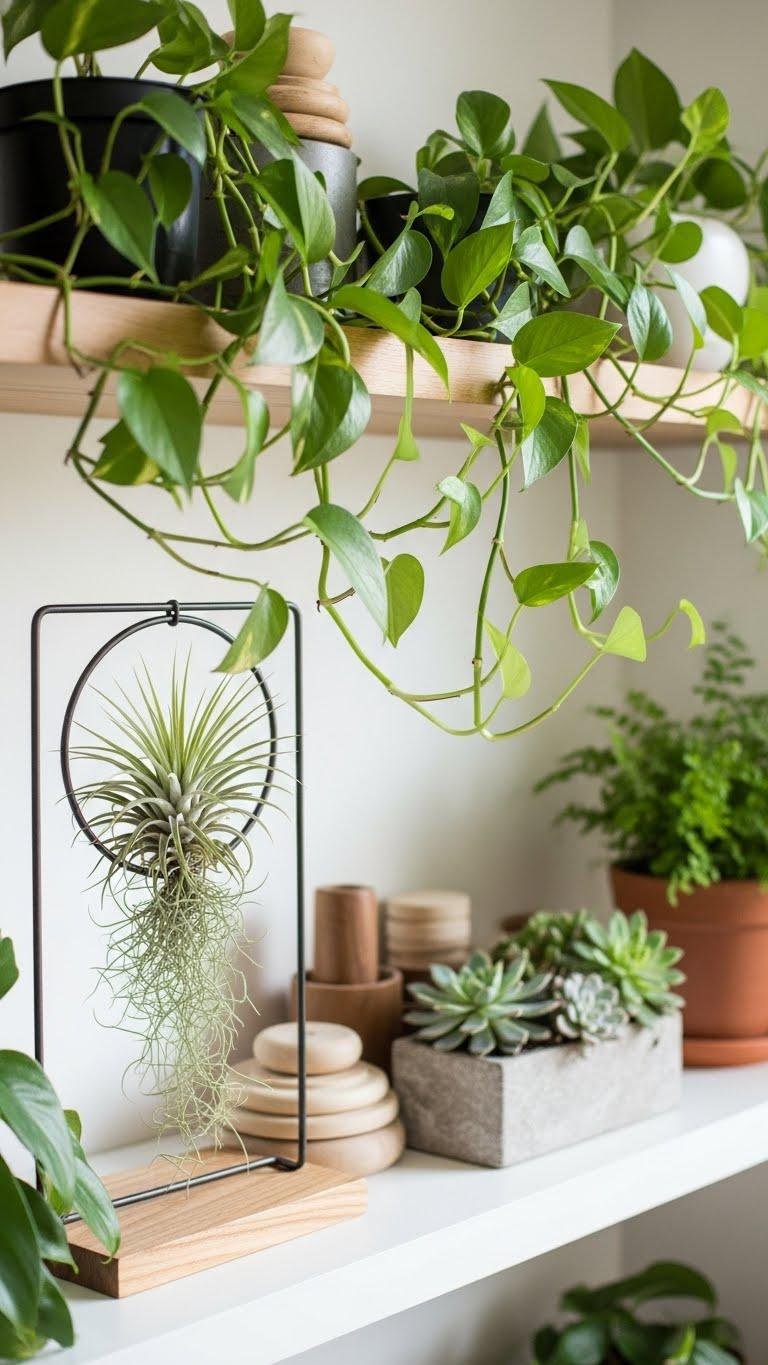
Bring in cascading greenery to soften hard lines and introduce graceful movement across your shelf. Let trailing pothos spill over edges, drawing the eye and easing rigidity.
Mix heights so vines flow past stacked objects, and place an airplant cascade in a minimal holder to add airy texture. You’ll create a liberated, living vignette that feels effortless, intentional, and free.
Combine Dried Florals, Woven Baskets, and a Bowl
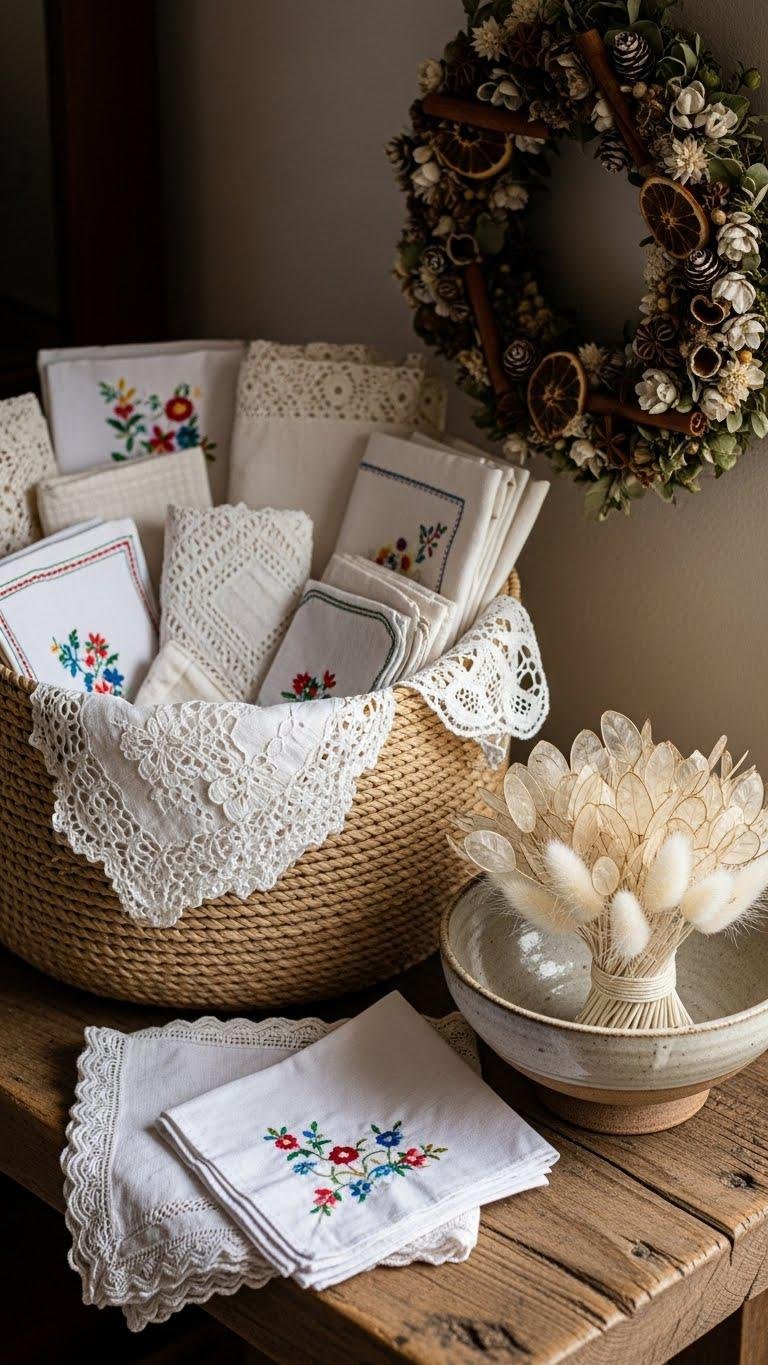
When you pair dried florals with woven baskets and a simple bowl, they create a tactile trio that balances structure and softness.
Place a basket with vintage linens beside a low ceramic bowl holding a compact bunch of bleached stems; let a small seasonal wreath lean behind for layered height. You’ll craft a liberated, lived-in vignette that reads intentional, not fussy.
Repeat Elements on Adjacent Shelves for Visual Balance

Often you’ll want to echo key pieces across adjacent shelves to create rhythm and calm; repeating a pair of books, a small vase, or a framed print on neighboring levels ties the composition together and guides the eye.
You’ll harness color repetition and material echo to align moods—match ceramics, metals, or woven textures so each shelf feels deliberate, spacious, and free.
Feature a Tall Sculpture Flanked by Low Decorative Items

Frequently, you’ll anchor a shelf by placing a tall sculpture in the center and balancing it with low-profile items on either side; that vertical focal point gives the eye somewhere to rest while the shorter pieces reinforce scale and keep the composition grounded.
You’ll mix industrial contrast with softer objects, honor negative space, and let the arrangement breathe so your display feels bold, uncluttered, and liberating.
Use Platters, Boards, and Trays to Elevate Pieces
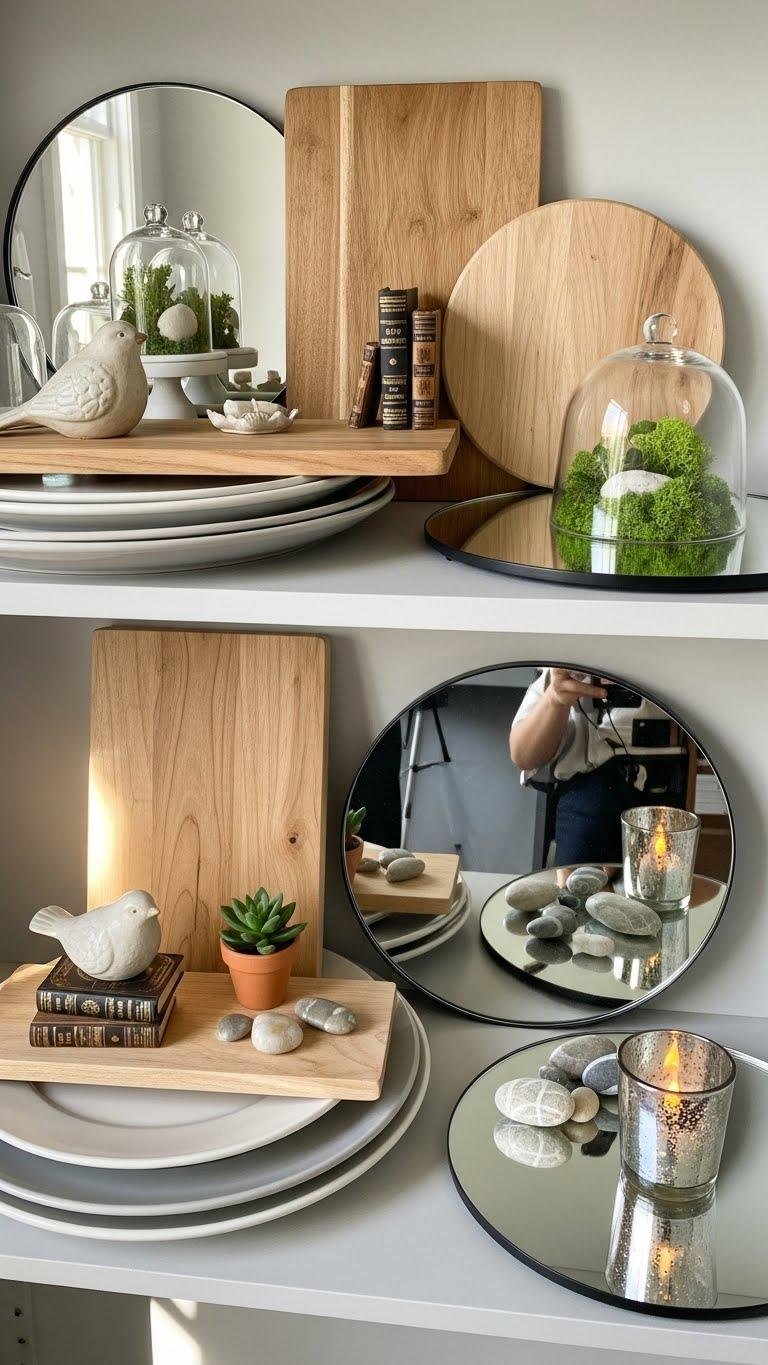
Layer platters, boards, and trays under smaller objects to give them presence and purpose; they lift items off the shelf, create defined groupings, and introduce texture without clutter.
You’ll use serving platters as low stages, wooden boards for warmth, and mirrored trays to reflect light and expand space. Arrange confidently, vary scale, and let each base announce the object it supports.
Mix Smooth and Rough Surfaces With Organic Finds
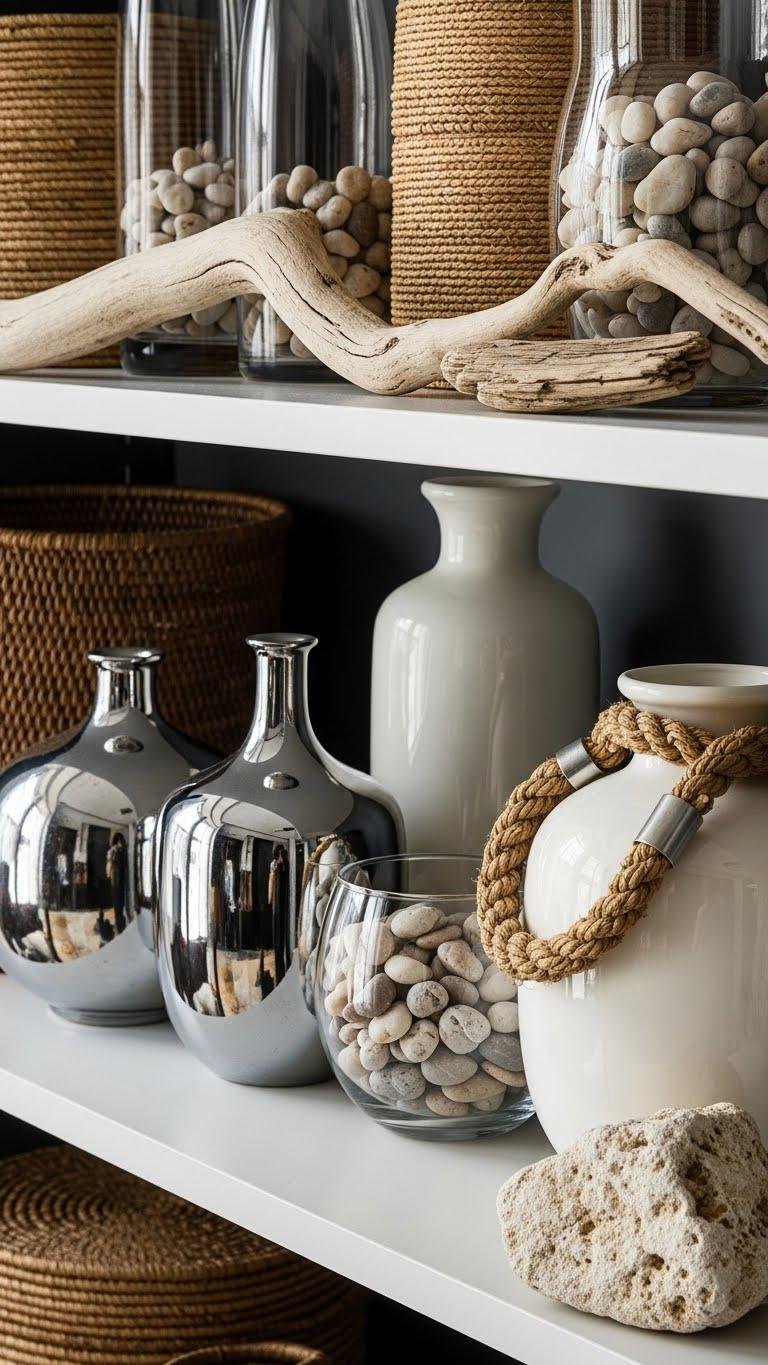
By pairing polished ceramics and glass with driftwood, woven baskets, or raw stone you create contrast that reads intentional, not accidental. Let natural pebbles nestle against glossy vases, and drape woven rope over a ceramic rim for tactile tension.
You’ll arrange organic finds to punctuate smooth planes, freeing the shelf from stiffness while keeping the composition purposeful and calm.
Create Symmetry With Varied Heights and Colors
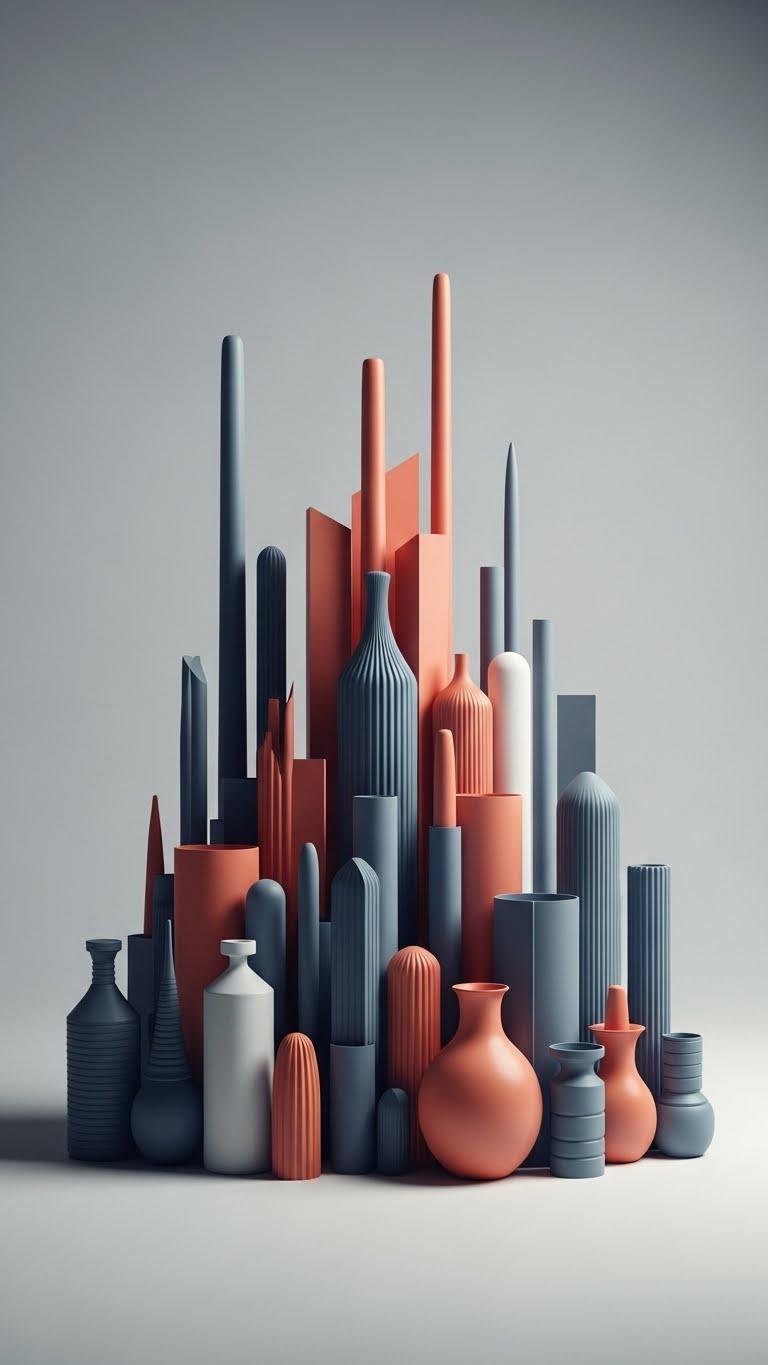
When you balance objects of differing heights and colors, symmetry stops feeling rigid and starts to look intentional; place taller pieces at the ends or center, counterpoint them with shorter items, and repeat hues to create visual echoes that tie the arrangement together.
You’ll use color gradients and height repetition to guide the eye, alternate focal points, and keep the display calm, confident, and freely expressive.
Place Potted Plants on High Shelves for Layered Depth

After you’ve set up balanced heights and repeated hues, add potted plants to high shelves to give the display real spatial depth. You’ll let trailing vines spill from a hanging macramé planter, place sculptural succulents up top, or suggest greenery with a compact vertical mosswall.
These choices free sightlines, create layered scale, and make the room feel open, intentional, and alive.
Incorporate Botanical Prints With Small Sculptures
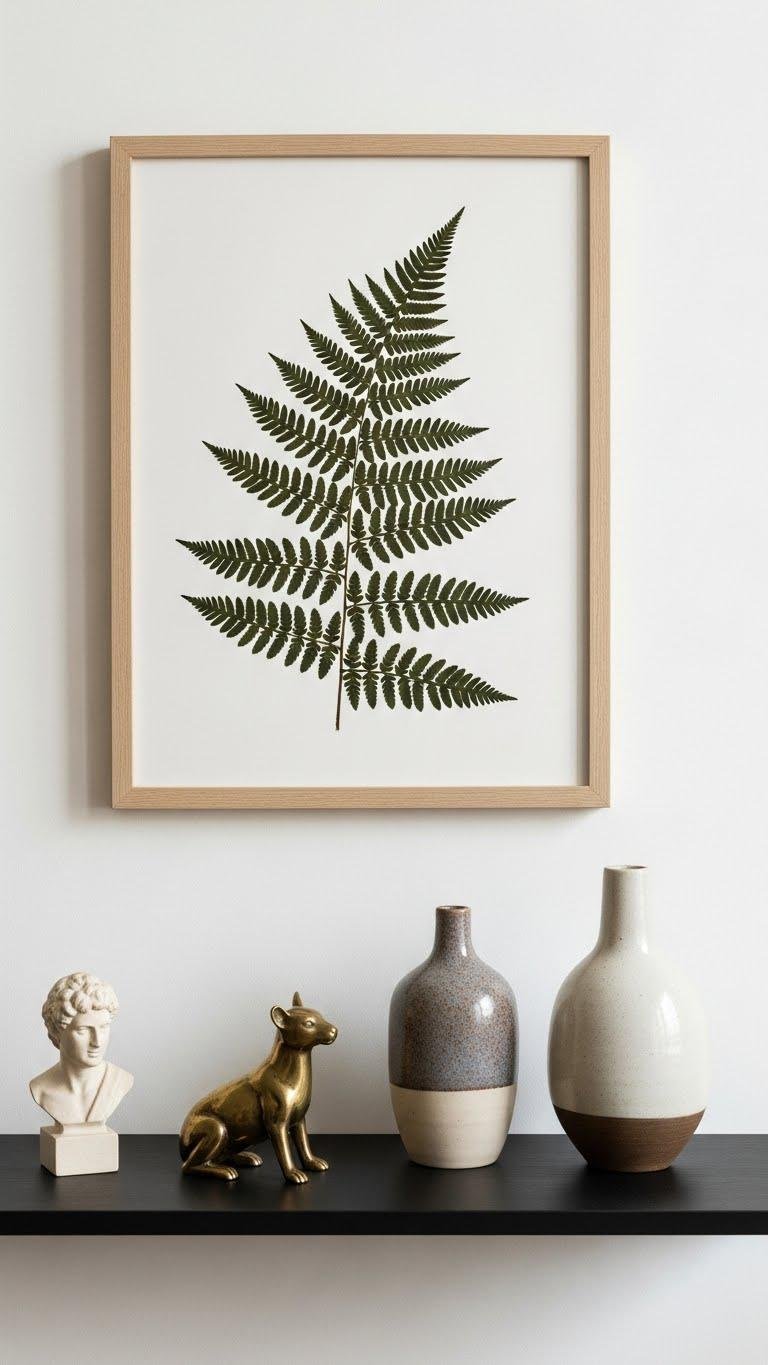
Layer botanical prints with small sculptures to create a focused vignette that balances flat imagery with tactile form—hang a framed fern or pressed palm slightly off-center and anchor it with a ceramic bud vase or a brass animal figurine on the shelf below. You’ll mix botanical silhouettes with textured objects, place miniature busts for scale, and keep spacing open so each piece breathes and feels free.
Group Three Decorative Objects on a Small Tray

If you want a polished vignette, place three complementary objects on a small tray to create an intentional focal point—vary scale, texture, and height so each piece reads clearly without crowding the others.
Choose one tall element, like a slim vase, a tactile object or miniature sculptures, and a low reflective piece such as mirrored coaster sets. Keep spacing deliberate and the arrangement confident.
Balance Color and Texture With Neutral Base Pieces
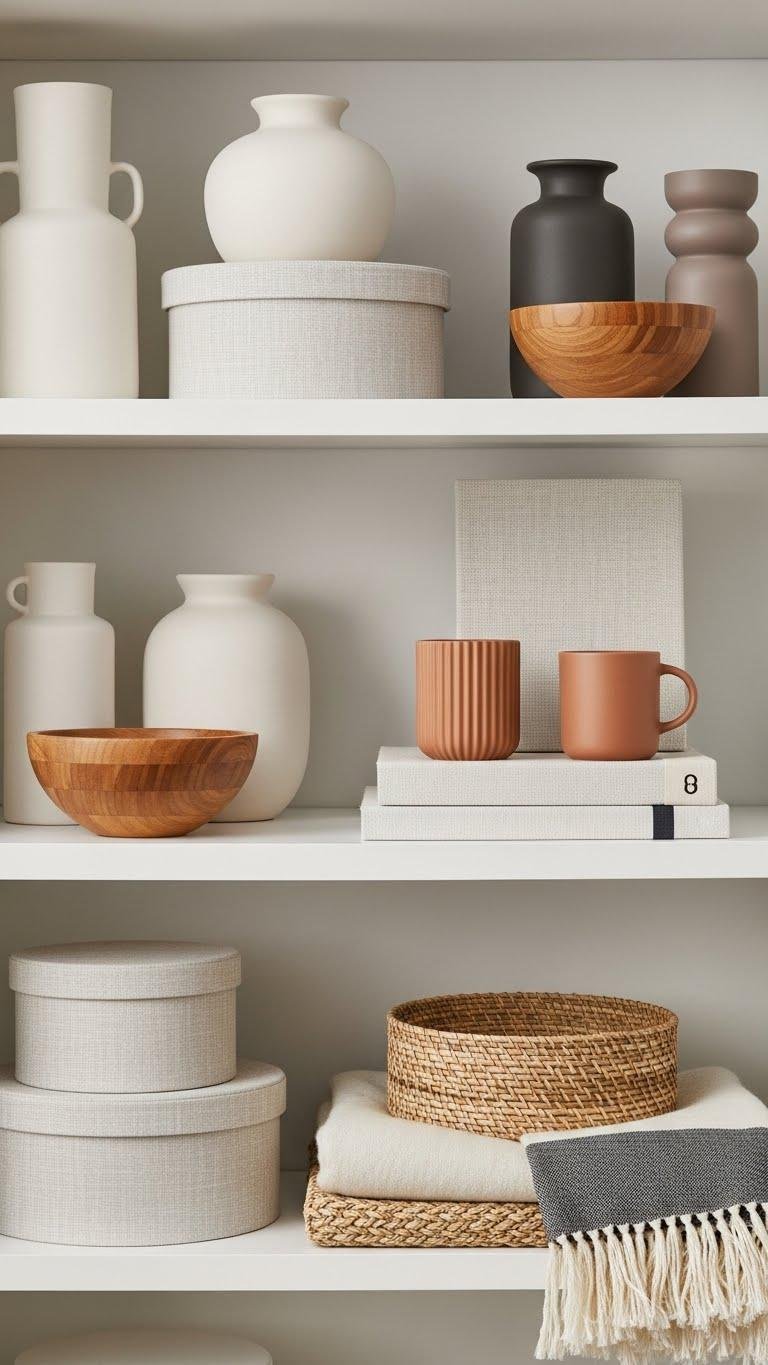
When you anchor a shelf with neutral base pieces—think matte ceramic vases, soft-linen boxes, or warm wood bowls—you give bolder colors and varied textures room to pop without competing.
Rely on a muted palette and tactile linens to set calm structure; layer a low-contrast throw, woven textures, and a single accent color. You’ll create airy, intentional displays that feel effortless and free.
Add Wood Beads, Hyacinth Baskets, and a Ceramic Bowl
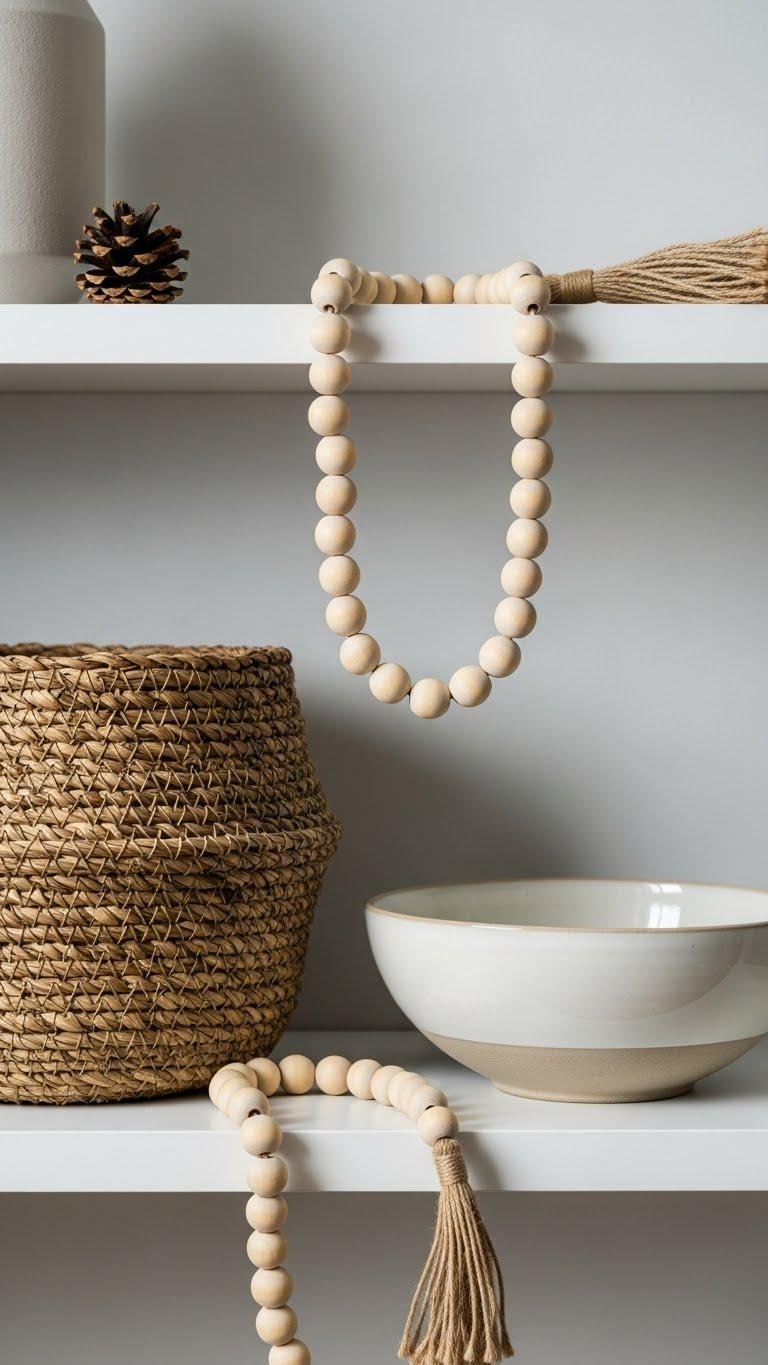
To build on that calm foundation, add natural sculptural pieces—stringed wood beads, a hyacinth basket, and a simple ceramic bowl—to introduce shape and rhythm without upsetting the muted palette.
You’ll place wood beads looping across a shelf, tuck hyacinth baskets for tactile warmth, and set a ceramic bowl as an anchor. Rotate items with seasonal swaps and use DIY styling to keep freedom intact.
Layer Frames, Books, and Small Vases for a Polished Look
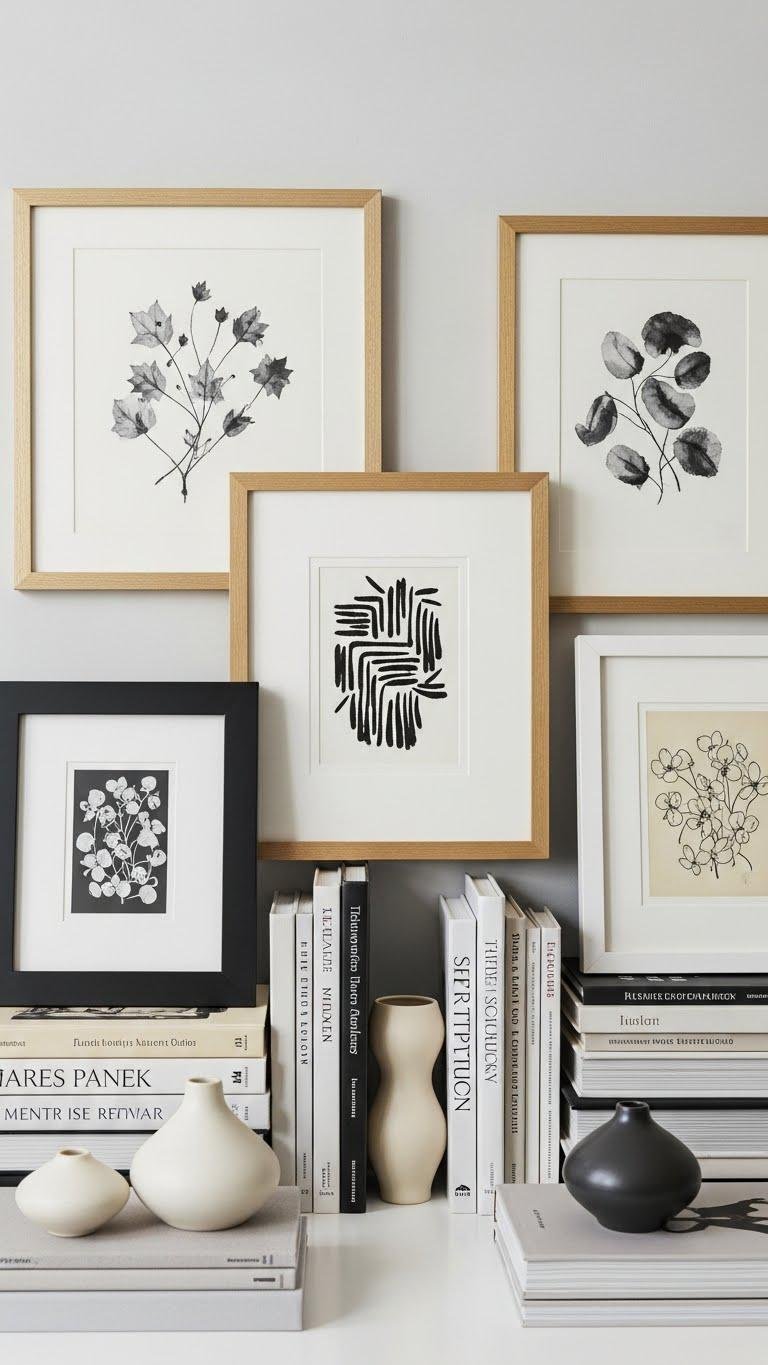
Because layered objects create depth and direction, start by arranging a mix of framed art, stacked books, and small vases so each piece reads both alone and as part of a group.
Place matte frames slightly forward, lean one against the wall, stack books horizontally to change height, and tuck asymmetrical vases between spines.
You’ll achieve a polished, airy look that feels intentionally free.